3.2 Business Models & Ecosystems
In most product management roles, you'll be responsible in part or whole for the revenue and profits of the product you'll oversee. To create successful products, you will need a basic understanding of how businesses make money and how they grow. In this checkpoint, you will dive deeper into these topics. This will help you think strategically when making decisions about your product.
By the end of this checkpoint, you should be able to do the following:
- Describe several business models and how they vary by industry
- Explain how companies grow and how they create ecosystems from their products
What is a business model?
Why not start with the basics? A business model is a simple way of explaining how a company makes money. Take this simple example: Target makes money when they sell you products at a higher price than what Target paid for them. (Of course, it gets more complicated when you think about products that are supported by subscription fees or advertising revenue.)
Now you can dig into the different business models out there and look at how product managers help companies build and support their business models.
Prices and profits in tech
In general, companies want to reduce the costs of producing goods and to increase the price they're sold at. Product managers, therefore, need to be able to calculate the costs of goods and revenue.
For example, think about making and selling a T-shirt. What are all the things you'd have to pay for before you sell it?
- Raw materials
- Labor and equipment for assembling it
- Transportation and distribution
When you sell the T-shirt, you add a few dollars over your cost to produce it. This lets you pay for the cost of producing your product, plus have some left over to fuel the future growth of your company or to take profits.
Now you can do the same breakdown but for a piece of software like Instagram. Here are some of the costs:
- Storage for images
- Bandwidth for sending the images
- Software for mobile apps, backend apps
- Overhead (office space, operations, etc.)
Instagram pays an ongoing cost for storing and sharing your images, and they've invested a huge amount of resources just building what's already there. But you get to use the Instagram service for free. If it costs Instagram $1 billion a year for all the software, hardware, and additional work required to run their service, and they don't want to charge users a fee for the service, they need to find another way to earn at least $1 billion a year to break even. How do they do it? They use advertising to balance their costs.
As you can see, building software and making a T-shirt have very different business models. It's important to understand the models and nuances of the industry you end up in to become an effective product manager.
Recurring versus transactional revenue
One way to think about business models is to ask if a product is bought one time or over and over. For example, you may buy a new car only once every few years. By contrast, you pay for an Amazon Prime subscription every month, no matter how much or how little you use the service.
Transactional businesses make their money one sale at a time. Most marketplaces fall into this category; purchases of most real-world goods are transactional. Some software companies sell their products as one-offs. When you buy Microsoft Windows 10, you're buying one license for one computer for the lifetime that Microsoft supports Windows 10. You don't need to pay Microsoft a monthly fee to continue using Windows 10.
Recurring revenue, in contrast, is paid over and over again in the form of monthly subscriptions or licenses. Media sites like Spotify and Hulu make their money from recurring subscriptions. Amazon generates both recurring revenue for Amazon Prime and transactional revenue for purchases from its marketplace. Many B2B software services like Salesforce or Google Suite are paid for on a per user per month basis.
Business models
There are many different business models used in tech today, and you'll learn about a good many of them here. As you read through these, keep in mind that a product type is separate from its business model. Microsoft could charge users a monthly fee for a license for Windows, but they've decided it's better to make the purchase transactional instead. Spotify could offer a pay-once lifetime subscription. Their underlying product—music streaming—would remain the same, but it could be sold via a different business model.

E-commerce
E-commerce sites generally take the transactional approach—making money one sale at a time. Some companies, however, find a middle ground between transaction and subscription-based models. For example, TrunkClub is a subscription service that sends customers an assortment of clothes to try on at home, allowing them to ship back the clothes they don't want to keep. Customers configure their trunks to arrive at different regular intervals, like monthly or quarterly. Some marketplaces offer a platform for people to sell their products, then take a cut of the revenue. For example, items on eBay or course lessons on Udemy can be sold for a fee.
Subscriptions for content
Lots of sites do business with a subscription model. Content sites, in particular, offer media like audio, video, or text in return for a recurring fee. To differentiate themselves, these companies aim to have exclusive content that is unavailable on other platforms. Some examples of these include the following:
- Netflix for video watching
- Hulu for broadcast TV
- Wired for tech news
Subscriptions for platforms
A platform is a software product that you license from another company. A good example of this is Splunk, which sells log processing services for tech startups. Many B2B products fall into this category, including Salesforce or Hubspot.
There are two kinds of subscriptions that are worth calling out in particular. A Platform-as-a-Service (PaaS) is a company that offers infrastructure for running other applications. Amazon Web Services (AWS) and Google Cloud Platform are two major PaaS providers who focus on selling highly scalable and reliable systems to other companies.
A Software-as-a-Service (SaaS) company sells user applications to other companies. Slack is one example of a SaaS company that sells communication tools to businesses for a few dollars a month for every user.
PaaS and SaaS companies tend to be highly valued by investors because they often retain their subscribers long-term, on top of adding new users over time. For companies that use a SaaS product, the cost and effort of moving from one product to its competitor can be quite high, and many companies will tend to avoid those costs.
Ad-supported
Many modern apps and websites are supported in whole or in part through advertising revenue. If you run an ad-supported product, you need to balance your users' experience against the space you sell for ads. If you have too many ads, your users' experience will be aggravating, and they may drift to your competitors. If you have too few ads, your business will not be able to support itself.
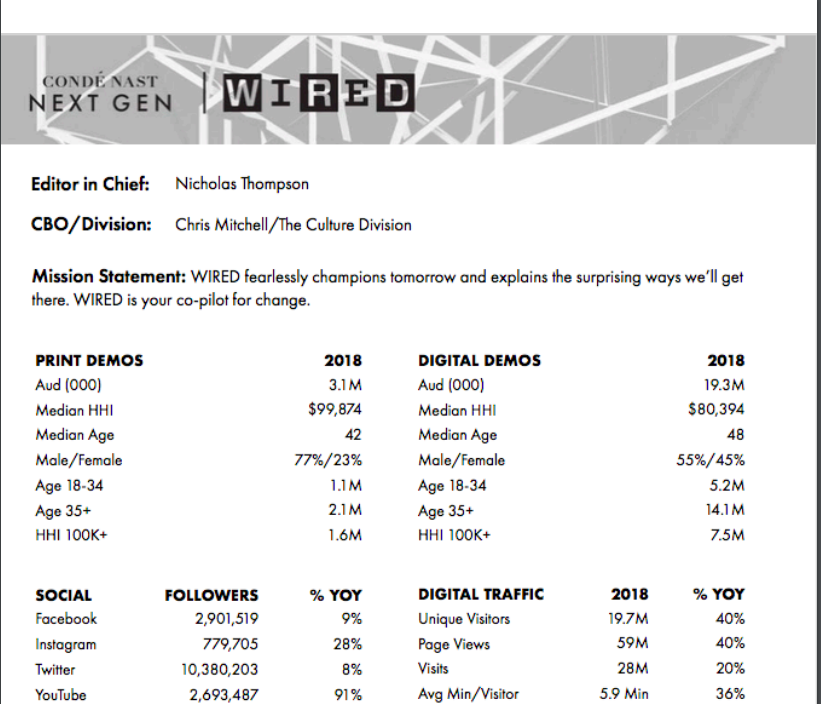
To make themselves more attractive to advertisers, ad-supported businesses usually target a specific group of people. For example, Wired can offer advertisers who are selling products to people in tech a way to reach that very specific audience. Wired even has a website for advertisers to learn more about their audience with details on their demographics, reach, and effectiveness.
Freemium and free-to-play
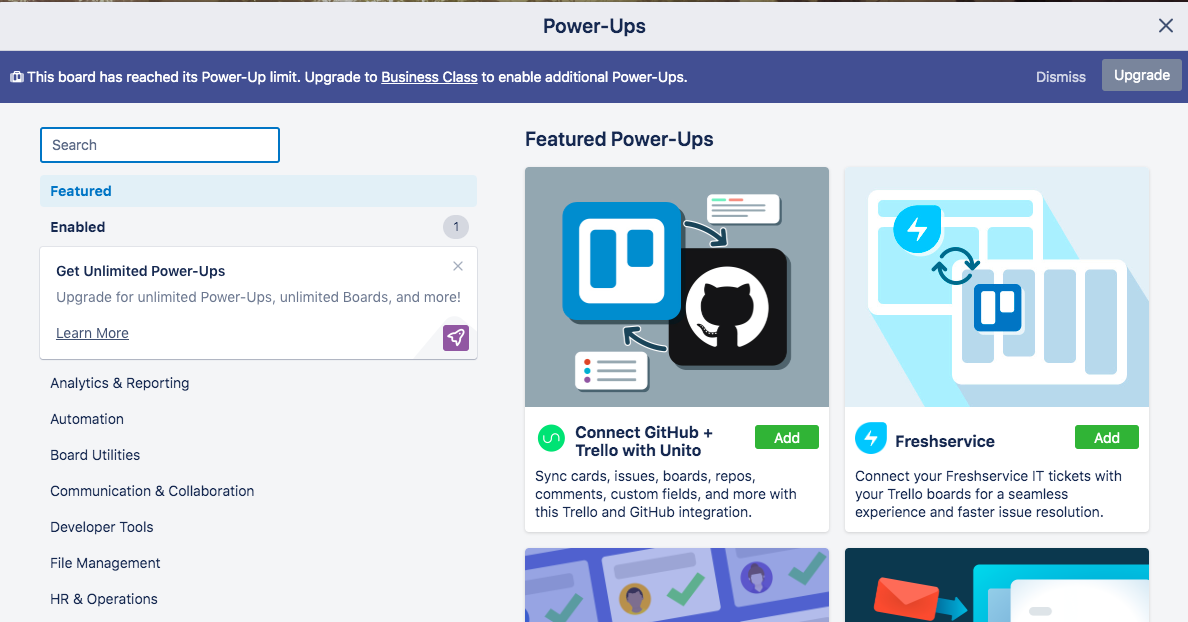
A freemium business model is used by products that feature one or more free services alongside additional paid features. Trello is a freemium project management application that has a basic experience available free for everyone. But it also offers pro features for an extra cost, such as the ability to export project deadlines into Google Calendar.
Free-to-play (F2P) is a specific version of the freemium model that is often used in video games. In this model, the game is free to play for most people, but you can pay for special enhancements, like better costumes for your characters, special abilities, or expansion packs. This model has quickly become popular among game developers, and now rivals the more traditional pay-to-play (P2P) model in which access to the entire game was sold as a one-time purchase.
The video below provides more insight into how the freemium business model works. We are however free, non profit model.
Content monetization and data brokers
Some companies make money indirectly from users. For example, Acxiom supplies businesses with additional data about their existing customers so businesses can better target their advertising. When using Acxiom, for instance, you might learn that your target user isn't just any woman with children but, more specifically, a stay-at-home mom with at least two children. That type of information can be invaluable for making decisions about where and how to advertise your products.
Data broker companies broker in data, meaning they make money by collecting large amounts of information, making it easy for businesses to match that information with lists from other companies. For example, if you're selling a very expensive product, you may want additional information to assess the risk of an individual customer before making a sale.
Some data brokers also sell outright lists of people if, for example, you want a list of people who recently bought a car or who are sports enthusiasts. There are lots of ethical issues in this industry, which you'll learn about in a future lesson.
Value propositions and business models
When was the last time you installed an app on your phone randomly, without giving any consideration to what the app does? The answer is probably never. You make the decision to install an app based on whether or not the app will provide some kind of benefit to you.
In business-speak, the term value proposition is used to refer to the benefit that customers receive when they use a given product. When you sell a product, you're really selling your value proposition. Consumers weigh your value proposition against other products' value propositions to make a decision about which product to use.
If your app provides great value, your customer will feel that it is worth more than they paid for it. Sometimes this value is explicit. For example, Salesforce can cost $50 a month per user. If using Salesforce helps you increase your revenue by $1000 per person a month, then it was definitely worth it. If they can't even make you $25 extra a month, then using Salesforce wasn't worth it.
At $50/person/month, Salesforce is targeting companies making enough revenue to justify paying for those subscription fees. They're also selling to those customers on the Salesforce ecosystem. You're not just getting the Salesforce service—you're also getting access to thousands of add-on tools that make Salesforce better. It's a pretty compelling value proposition.
But Salesforce is a B2B app. For B2C apps, the value proposition is usually fuzzier. If you make a game and sell it for $4, but people only get $1 worth of enjoyment out of it, you're gonna get a lot of bad reviews and requests for refunds.
How companies grow
In general, there are two paths companies can follow to grow:
- Acquiring new customers
- Getting more revenue from existing customers
The strategies you will use to accomplish growth largely depend on which path you pursue.
Acquiring new customers
The main way companies grow is by finding people who don't use their product and getting them to use it. Every additional customer directly contributes to your growth. The simplest customers to acquire are ones who are a perfect match for your product. So if you're Salesforce, it's easiest for you to sell your product to more medium-size companies with a sales team.
You could also try to acquire new customers who differ from your existing ones. For example, if Salesforce wants to expand to non-profit customers, they'll have to adapt their business model because their default price is set for for-profit customers. In general, when you take your existing product and sell it to new customers, you should think through the features, pricing, and other parts of your business to make sure it fits those new customers.
Get more from your current customers
If you want to grow, you can also find ways to get your current customers to pay more. A naive example of this is if you sell advertising. You can find new advertisers, or you can grow by having your current advertisers spend more to advertise with you.
A common growth pattern is to sell add-on services that compliment your products to people who are already your customers. For example, if you buy Google Suite from Google for $12 per person per month, you may eventually run out of storage space. Then you can pay Google an additional $10 per month for additional storage. Google didn't have to find a new customer; they just got you to spend more.
Trust plays a big part here. If your current customers really love your product, they are likely to buy the next product you make, as long as it solves (more of) their problems. If you're smart about the add-on products you offer, your users will become further dependent on your product and more likely to remain your customers.
Startup versus public company growth
As was discussed before, public companies focus on predictable, steady growth so they can appease their shareholders. They do this using the strategies above—expanding their customer base and adding new products to increase their revenue over time.
Startups have a related problem—they're expected to return a profit to their investors in a timely manner. A rule of thumb is that an investment in a startup today is expected to be worth 10x more in two years. That means the startup needs to double, double again, double again, and then grow a bit more during those two years. It's achievable, as long as you have a great product and you've mastered your business model.
Startups don't have to be profitable as they grow, but they do need to scale appropriately. Recall the story of Pets.com, which spent tens of millions of dollars before going out of business. As long as you're growing and your costs are manageable, you're doing fine as a startup.
Finally, startups are more likely than other companies to change their business model entirely. So a startup could start with a free product and add ways to make money later. YouTube is a great example of this. It took years before they settled on advertising as a way to monetize their service. These kinds of changes often come with some bumps for your users, but if they really love your product, they'll adjust to the changes.
Ecosystems
Most of the product examples you've learned about so far have been single-purpose ones, like YouTube or Etsy. They have a couple of primary users—video makers and watchers for YouTube, or sellers and buyers on Etsy. These products are pretty straightforward, even if they comprise many features.
An ecosystem is a collection of products and services that integrate with and build on top of each other. Android and iOS are great examples of this. They are products unto themselves, but they enable other companies to build apps that run on them. Those apps can use services provided by Google and Apple, and apps can even interact with each other. Your cell phone is a better product, because all those apps play well together.
Slack is another example of a product building an ecosystem. Slack provides ways for other applications to interact with users through Slack's interface. For example, if you share a Google Doc through Slack, Slack will ask you to update the permissions on the document so that the recipients can see it. That interaction happens in the Slack interface; you don't have to use your web browser or any other tool to make the change. Check out all the other apps you can integrate into your Slack here. These types of integrations make Slack more attractive for many users.
The business model of an ecosystem is to enable as many types of products to work with your ecosystem as possible. The whole ecosystem is more valuable than any individual product in it. It becomes even more valuable as more products integrate with your ecosystem—especially when other companies are doing the work to increase the value of your ecosystem. This means offering services and APIs (which you'll learn about later) that allow all these different apps to work together.
As a product manager, you may work on products that are trying to become ecosystems, or you may build products that tie into another ecosystem. In either case, you need to ask what's the value of this product or this feature for the users and in the ecosystem. Some products make sense for a group of users but may not make sense for those users in an ecosystem. For example, if you were going to build a dating app, would you want to build it in Facebook's ecosystem or Slack's? Probably Facebook.
Examples of ecosystems
Because ecosystems are so common, you should be aware of a few of them. If the subject of ecosystems comes up in your job interviews, you'll be able to discuss them like a product pro.
Amazon is a company famous for turning all its products into services. If you work at Amazon and are going to build a new data service, you must use other Amazon services like Redshift or RDS. Amazon also figured out that they can resell those services to other companies. Amazon Web Services (AWS) has become a multibillion-dollar company-within-a-company for Amazon. Many other companies have built their products on top of Amazon's AWS ecosystem.
Google has an ecosystem built around its advertising business. Google tracks all the search and surfing activity of its users in order to display appropriate ads to users. For example, if you start searching for hotels in Cancun, you may start to see hotel ads when you browse The New York Times. It's all in the service of Google understanding you for the sake of that next advertisement.
Apple has an ecosystem built around its products too. If you own an iPhone, you probably also own AirPods and a MacBook. In addition to the great design in each of these products, they all work together well, with special programs and features like AirDrop or FaceTime you can use across devices. And once you start buying lots of iPhone apps, you're unlikely to switch to Android.
The ecosystem serves Apple's business model well. Most Apple products are sold transactionally—you buy an iPhone or a computer and keep it for the next several years. Because the purchases are infrequent, Apple needs to receive a high margin of profit for each product it sells. There are cheaper options for cell phones, earbuds, and computers, but many consumers willingly pay the Apple tax because of the power of Apple's ecosystem.
Salesforce has an ecosystem built around its SaaS product. If you are building any kind of sales or marketing product, your first integration will almost certainly be with Salesforce because they are such a dominant player in the market. Integrating with Salesforce gives your product instant access to millions of Salesforce customers, far more than what you could sell to if your product was being sold alone. As you integrate with Salesforce, you are contributing to their ecosystem.
Anu Hariharan has an amazing talk at Y-Combinator abiut the 9 common business models in today's modern world
Research ✍️
Analyze the business and growth models for each company below. How are they trying to achieve growth? Are they focused on adding new customers or getting existing customers to spend more? What is their business model, and how is it different or similar to the business model of their competitors? How would you describe their ecosystem, if they have one?
- Kickstarter
- Spotify
- Microsoft
Write out your answers in your notebook or notion page. It's important that you have a good grasp of how business and growth models impact product decisions, especially if you are new to the business side of things.