3.1 Types of Products and Companies 🎯
This section includes an Activity 🎯. Sections marked with a 🎯 are the one's that have an activity in them. Activities are optional assignments. But we highly recommend you do them.
In this checkpoint, you'll start to explore how product strategy varies based on the type of company, industry, and audience. As you read, ask yourself: what sort of company is the best fit for my personality or past experiences? Am I particularly excited about a certain industry? Use the information in this checkpoint to think about the type of companies you'd like to work for when you graduate from this program.
The product manager's role is generally the same regardless of the company they work for. However, different products do need to be managed differently. If you're running the New York Times mobile app, you're probably paying attention to your ad revenue and subscription rate. By contrast, if your product is the Google search function, you are focusing on click-through rates and the position of the search results people are clicking. In a smaller company or startup, you're probably paying attention to conversions and opportunities for growth.
By the end of this checkpoint, you should be able to do the following:
- Explain how products vary based on the type of company and industry
- Describe how company goals vary based on the type of company
B2B or B2C
At the highest level, you can begin to understand a company by asking whether it offers its products and services to consumers or to other businesses. This simple distinction leads to big differences in how a company operates.
Business-to-business (B2B)
A business-to-business (B2B) company sells goods or services to people in other businesses. Here are some examples of B2B companies:
- Salesforce, a popular platform used by sales teams for customer relationship management (CRM)
- Atlassian, maker of Jira, a popular project management software tool you may encounter
- Slack, whose chat software integrates with many other platforms and is popular with startups
As a product manager, the advantage of running a B2B product is that your audience is very clear. You're targeting a subset of all companies and a subset of people within those companies. That will help you pinpoint the right features that will make your product successful.
The challenge in running a B2B product is that buyer expectations are much higher for a B2B product than for consumer products. Adopting a B2B product is costly and time-consuming for the business—including the price of the product, migrating processes to use it, and training employees to use it. Companies will buy your B2B product only if they're confident that you can solve their problems, and that your solution will be around long enough to justify their investment in it.
Business-to-consumer (B2C)
A business-to-consumer (B2C) company offers its products directly to individual consumers, not other companies. Here are some examples of B2C products and companies:
- Sony, who offers consumers a variety of electronics—from Playstation and TVs to cameras and MP3s
- Tinder, an app that matches individuals looking to find dates and relationships
- Intuit, maker of Turbotax, a software program that helps people prepare and file their taxes
While B2C products are often also used by businesses, the key difference is that B2C products are primarily targeting individual consumers.
When you are running a B2C product, you need to be especially thoughtful about the business model. For instance, if your product is an app that consumers can buy with a one-off purchase, you may suffer in the long term when support costs exceed the revenue from the one-off payment. To keep this type of product profitable over the long haul, you'll need a high, and sustained, volume of sales.
Other variations on B2B/C
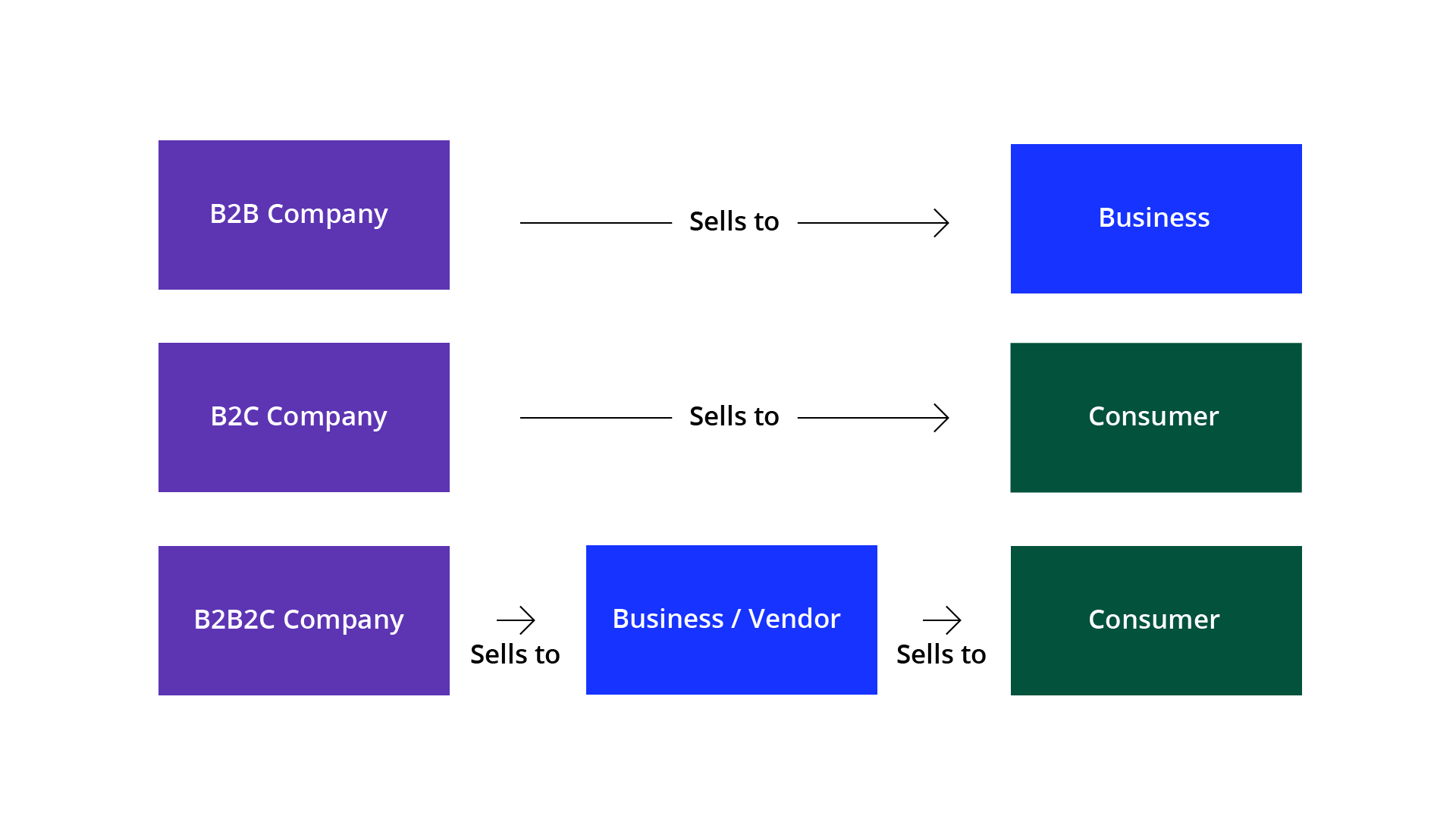
The distinction between B2B and B2C is critical for PMs to understand their audience. But there are some variations you should be aware of. First, some companies are both B2B and B2C. Google is an obvious example of this. Many Google products are built for everybody, like their search engine. But other products, like Google Cloud or Google Analytics, target businesses specifically.
Some companies run marketplaces that have a B2B component for retailers but are B2C for individual buyers. eBay and Etsy have consumer marketplaces as well as a separate set of products for the merchants on their platforms. Similarly, sites that depend on advertising can be B2C for the core product but B2B for selling and managing ads.
Finally, you may encounter a B2B2C company. These companies sell services to other businesses, which in turn offer them to consumers. The Microsoft Windows operating system and Microsoft Office are good examples of this. Many consumers do not buy Microsoft software directly. Instead, Microsoft sells its software to companies like HP or Dell that then install Microsoft software onto new computers for consumers. But there's a key difference between B2B2C and B2B or B2C models. For both B2B and B2C, the buyer and user are usually the same party. But for the B2B2C company, the producer, buyer, and user are each different parties.
For more information on B2B, B2C, and C2C companies and how the product manager's role varies between these businesses, check out this video below that we found by Dr. Bart Jaworski. We had to scout the internet to find this really nice explanation.
Types of industries
To be successful as a PM, you'll need to learn the inner workings of your company's specific domain. For example, if you work at a money management company like Betterment, you'll probably have to learn a lot about finance and investing. Otherwise, you could make serious mistakes that could put your company at financial or legal risk.
As you become a more senior product manager, specializing in an industry can accelerate your career growth. It will help you be successful in future roles in that same industry. Similarly, if you're looking for your first product job and you already have experience in a field like finance, you'll probably have an easier time getting a job in that industry. Take advantage of this!
Below, you'll review several major industries where PM jobs exist.
Health and medicine
Many companies that provide health services are finding ways to use technology to improve health and well-being. Flatiron Health helps cancer patients get the care they need and accelerates cancer research. Apps like Calm or Headspace help people learn how to meditate and improve their mental health. You might already be familiar with 23andMe, which was the first company to offer genetic reporting to consumers. These companies tend to value skills like data analysis or the ability to build systems that enforce specific processes.

Finance and insurance
The finance and insurance industries use tech to help them run more efficiently. Some companies provide direct financial services like Robin Hood for stock trading, Wealthfront for savings and financial planning, or Mint for analyzing your spending. Companies in these industries are looking for people who can help them produce consumer applications, automate their work, and provide data analysis.
Advertising
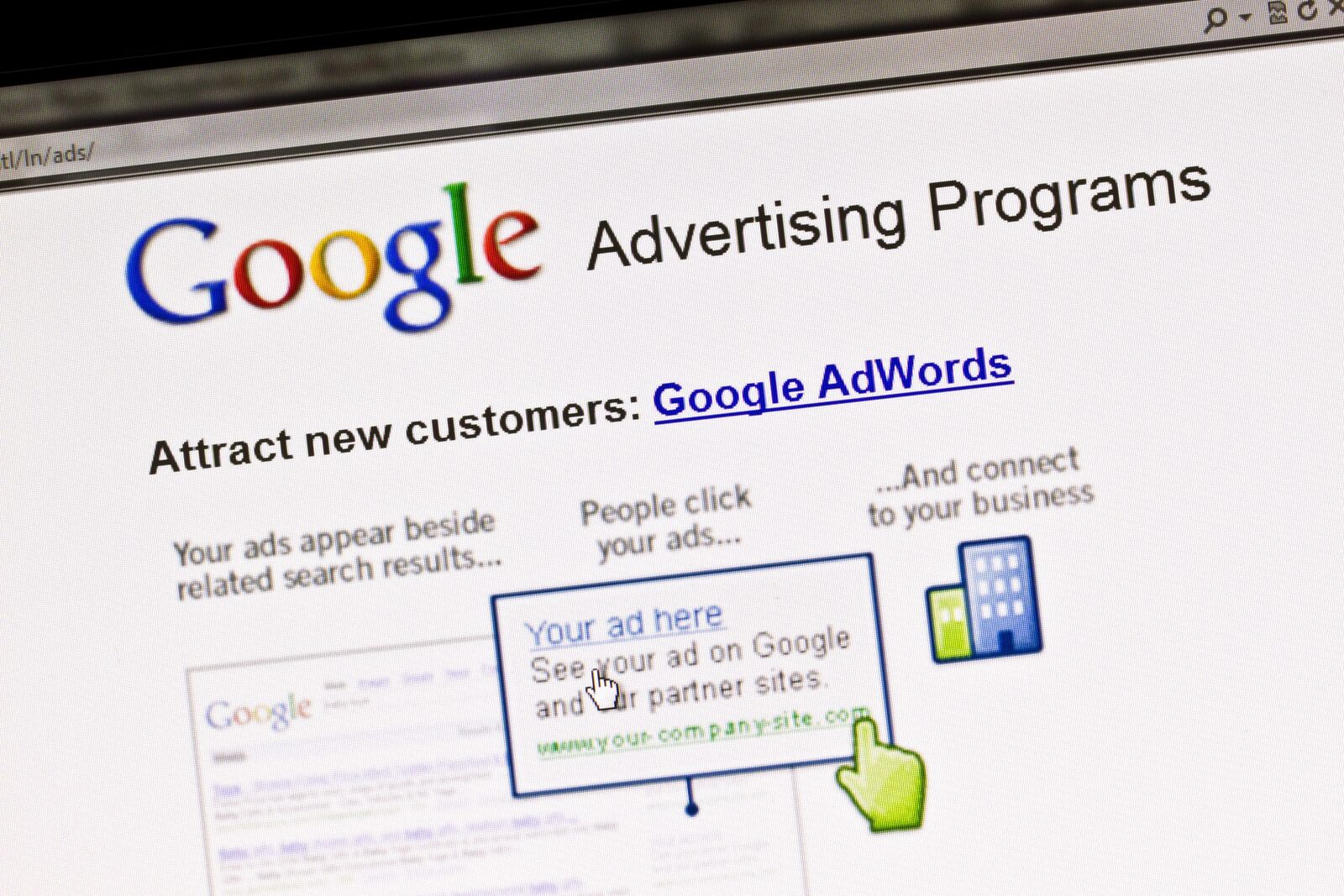
Many websites are powered by advertising revenue, and advertisers pay to attract people to their sites. Many products have been built to help both advertisers and publishers find each other, get ads displayed, and spend (or generate) money. Companies in the advertising industry tend to like people who have experience building highly scalable systems and data analysis products.
Marketing
Besides advertising, marketers use other tech products to help them get the word out. Startups like Marketo and Eloqua provide services for tracking email and website activity. Other products cross the line between marketing and consumer products, like Wordpress for text and blog content, Twitter for social media distribution, and YouTube for video publication. Marketing companies look for people with experience in analytics who can build scalable systems to create these large scale tracking systems.
Analytics
Product managers love good analytics tools because they help them understand the success or failure of their products. Advanced analytics products like Google Analytics can zoom out and see user trends in aggregate. Other tools, like Amplitude, allow you to zoom in on individual users. Business intelligence products help PMs dig into the data in their databases. For example, products like Looker and Periscope are popular tools for visualizing data (you will learn more about using these tools later in the program). Companies that create these analytical tools value people with experience in big data. They also look for people who can simplify complex interactions through elegant design.
E-commerce
E-commerce, or e-comm for short, includes any website where you purchase goods like Amazon, eBay, or Target. Some e-comm products only have an online presence, while others combine online sales with a traditional storefront. Some e-commerce sites like ModCloth sell their own products directly to consumers, while others like Etsy offer a marketplace where sellers and buyers can find each other. Some sites do both, like Amazon, which sells its own products in addition to providing marketplace services to other retailers. E-commerce companies value people with experience in customer acquisition, logistics, and payments.
Media
Media companies depend on content production or distribution for their success. Netflix and Hulu are obvious examples of video media companies with subscription services. Similarly, news websites like Vox or BuzzFeed are media companies powered by advertising. Social networking sites can also be considered media companies. YouTube is a good example of a product that is focused on media while also having a strong social component. These companies value people who have worked in media before or who have built highly scalable systems.
AI/ML
You've probably heard about artificial intelligence (AI) and machine learning (ML). These technologies power many tech experiences, from online content moderation to targeted advertising. Crowdstrike uses these technologies to detect threats to computer networks. NVidia, a computer hardware company, uses its technology to power self-driving cars. Companies like Amazon and Google sell AI and ML platforms that other companies can build their own products on. These companies value people with significant experience in tech or big data.
Education
Ed-tech is a fast-growing industry focused on using technology for educational purposes. Many companies in this space attempt to improve student outcomes in K-12 educational settings, prepare students for exams like the SAT, or promote STEM subjects (science, technology, engineering, and math). Other companies are focused on the higher education market, selling products to universities or college students. Khan Academy offers free video lessons in math and other subjects. Ed-tech companies look for people with previous experience in analytics, education, or in making products for kids and teens.

Blockchain
You might have heard about blockchain, like Bitcoin and other digital currencies. This technology functions like an accounting ledger that prevents people from forging entries. Many companies are trying to capitalize on this, either by building their own blockchains or by creating platforms that sit on top of other blockchains. Ethereum is a popular digital currency that allows developers to easily build their own applications on top of it. To learn more, check out CryptoKitties as an example of an Ethereum DApp (decentralized application). Companies in the blockchain space value people with strong technical skills and programming experience.
VR/AR
Virtual reality (VR) has been hyped as the next cool thing for decades, but it's recently taken a big leap forward with the release of high-quality consumer VR hardware from companies like Oculus and HTC. Similarly, Apple and Google have made it easy to add augmented reality (AR) features to apps. AR lets you see additional information overlaid on top of what you are viewing. Pokémon Go is an example of an augmented reality game in which you catch Pokémon that are superimposed over your camera's feed. Google Maps also has an AR mode that gives directions while you point your camera. Companies in the VR/AR space look for people with experience building combined hardware and software products.

Hardware versus software products
Tech products are not just software and applications. Many tech products are hardware products or hardware products with a large software component. There are key distinctions here.
Software products are programs that run on computers, such as on your mobile device or in your web browser. They can be easily distributed and updated—often over the internet. Hardware products are physical things like your cell phone or television, which often have a software component, too. For example, your cell phone is hardware, but it runs software on it. Even your television is probably running software to support online streaming services and other smart applications. Similarly, many pieces of software are powered by hardware. For instance, augmented reality apps are only possible in conjunction with their specific hardware.
Company types and product management
Beyond the industry, your experience as a product manager will also be influenced by the type of company you work for. Take a look, below, at a few of the factors that you should think about when evaluating potential employers.
Company size and maturity
One of the biggest variables in your PM role will be the size of your company. Larger companies like American Express or Dropbox can have dozens or even hundreds of PMs overseeing the work of thousands of developers in multiple locations. To manage teams of that size, product managers work in teams and divide large products into small areas of responsibility.
For example, at American Express, you could be part of a team working on their automated help system, and your role could be focused on only the chat interaction. Your peers would manage the content and search systems, and your joint goal will be to reduce the time and effort needed to address support issues. In general, the larger your company, the more mature it is. Maturity means the business has a well-known product and a loyal customer following. Growth is typically slow and steady. Processes are well established, but this also means there's more bureaucracy.
At a small company, like a startup, you will probably be one of very few product managers who own larger chunks of the product. You could own the entirety of the support experience for your product in addition to some related internal tools and data analytics systems. If the company is just starting out, you may even own the entire product!
Below are some other differences you'll notice between large and small companies.
- Larger companies usually have well-specified processes and tools that they use for their teams. Smaller companies are more flexible, and you may need to create processes from scratch with little guidance.
- You'll have more opportunities to change teams and responsibilities at a large company. Small companies usually can't offer that kind of flexibility.
- Larger companies tend to be more risk-averse, focused on sustaining growth and profitability. Smaller ones tend to accept more risk in return for faster growth.
- Your work at a smaller company is more autonomous, in part because there are fewer people involved in making decisions. Large companies tend to have more complicated and political decision-making processes than smaller companies.
For all the reasons above, smaller companies tend to work great if you're self-motivated and strive for your own growth. Larger companies are usually a better fit if you thrive in guided environments or want more help and feedback on your work.
Startups
Startups are their own special type of company for several reasons. You should know a few things about them if you're considering working for a startup, or even founding one yourself.
One way to think about a startup is that it's a company that is in the process of figuring out how to be a bigger business. This includes finding the right customers, the right product features, and the right processes to scale up to the next tier of growth. All your product work should be aligned with this goal and the strategy your company chose in order to achieve it.
A big chunk of your time at a startup will be spent learning more about your customers and understanding their problems so you can build the right solutions. Later on, you'll spend time learning about this discovery process and how to navigate it successfully.
Here are a few other qualities about startups to consider.
- Most startups expect their product managers to jump in on their first day on the job and oversee a product. Startups tend to let employees sink or swim. This is great if you're the kind of person that thrives when you have little oversight and management, but this kind of environment is not for everyone.
- Pay at startups can range from competitive with larger companies to below-market. In either case, you should expect to receive stock options from your startup (also known as equity). Your stock options are only worth something if your company has a successful exit (like an IPO or acquisition). This is meant to incentivize you to stick around for a few years and work hard to help the company succeed.
- All companies have more work to do than people to do it. This is especially the case at startups. You'll have to make trade-offs about what gets done first amid a variety of urgent requests. You'll learn more about addressing the challenges of prioritization in future lessons.
- As a product manager, you'll wear lots of hats at a startup, jumping in wherever you need to. You might work with the sales team to pitch to potential customers, help customers in need of support, or even design features for your team. Doing all these things is a great way to learn about other roles in a company and understand how product can work with them.
Nonprofit and public benefit corporations
Nonprofit companies focus on public good or other non-monetary outcomes. For example, TechSoup is a nonprofit that provides tech services for other nonprofits, and Code For America provides modern software development to help local governments.
Public benefit corporations similarly focus on the public good, but try to balance that with profitability. Kickstarter is an example of a public benefit corporation that focuses on providing users with great services while maintaining profitability.
Modern tech nonprofits and public benefit companies are as obsessed with creating great products and making customers happy as any for-profit company. You'll find that the day-to-day at these companies is similar to any other product management job. However, as a PM at a nonprofit, you can expect to focus on the positive outcomes of your product as opposed to striving only for relentless growth, as you would in a startup.
If you're the kind of person who thrives on the intrinsic motivation of doing good, then companies like these would be a good fit. On the other hand, the pay is typically lower in these types of companies compared to for-profit companies. So if you're motivated by a big paycheck (or a large payday, if the company has an exit), you should consider working at a for-profit corporation.
Similarities across companies
While there's considerable variation in how these different types of companies run, you'll find many similarities, especially when it comes to product management. Here are just a few.
- Companies expect product managers to take ownership of problems and ensure they're solved to completion.
- You'll need similar skills to run product at all company types—that combination of design, tech, and business knowledge.
- You need to understand how your company works and build relationships across the organization to make your products successful.
- You'll be especially valuable if you can do your own data analysis using Excel, SQL, Google Sheets, or similar tools.
- You'll be expected to operate independently and to act as a leader among your coworkers.
- You'll always have more priorities and work to do than time to do it, so knowing how to manage your time and bandwidth is essential.
- You will always need to prioritize your work in a way that aligns with the goals of your company.
In the end, you'll have a similar working experience as a product manager at any company. The real issue is to find a company whose industry and products align with your strengths and interests so you can enjoy a long, successful, and fulfilling career.
Activity 🎯
In your notebook/notion page, write answers to each of the following prompts.
- Which industries are you most intrigued by? How will you go about learning more about them?
- Do you have any experience or skills that could help you break into your first product role in one of these industries?
- What kind of company do you think is the best fit for you? What industry? What size? What kind of products? Why?
PM job interviews often include questions similar to this, such as "why do you want to work at this company?" or "what interests you about our products in particular?" So treat this activity as part of your job search preparation.