1.4 PMcademy's Bootcamp! ⭐️
This section includes an Assignment ⭐. Lessons marked with a ⭐️ are the one's that have an assignment in them. These are mandatory for everyone to get a good grasp of the bootcamp learning. Make sure you do them all and submit them on Slack.
Welcome to the first step on the road to your new career. You must have a lot of questions. What will you be learning about in this program? When are assignments due, and who will grade them? What do you need to do to graduate successfully? And how would PMcademy support you in getting through this program and to the job of your dreams? All of these questions and more will be answered in this orientation module.
By the end of this checkpoint, you should be able to do the following:
- Describe the key topics in the curriculum
- Plan ahead to manage your learning schedule
- Create your notebook and submit your first assignment
The curriculum
To be a successful product manager, you must understand not only the professional language and deliverables of the product management field, but also the three pillars of creating successful products: business, technology, and design. Click through this slideshow for a high-level overview of the topics included in the curriculum:
Which part of this curriculum will be the most challenging? It all depends on your background and existing skill set. People come into product management from a variety of adjacent occupations. If you are a UX/UI designer, you might breeze through assignments in the design-related modules, while spending much more time and effort on business concepts and assignments. If you are new to design but have a lot of experience in sales and marketing, the opposite may be true for you.
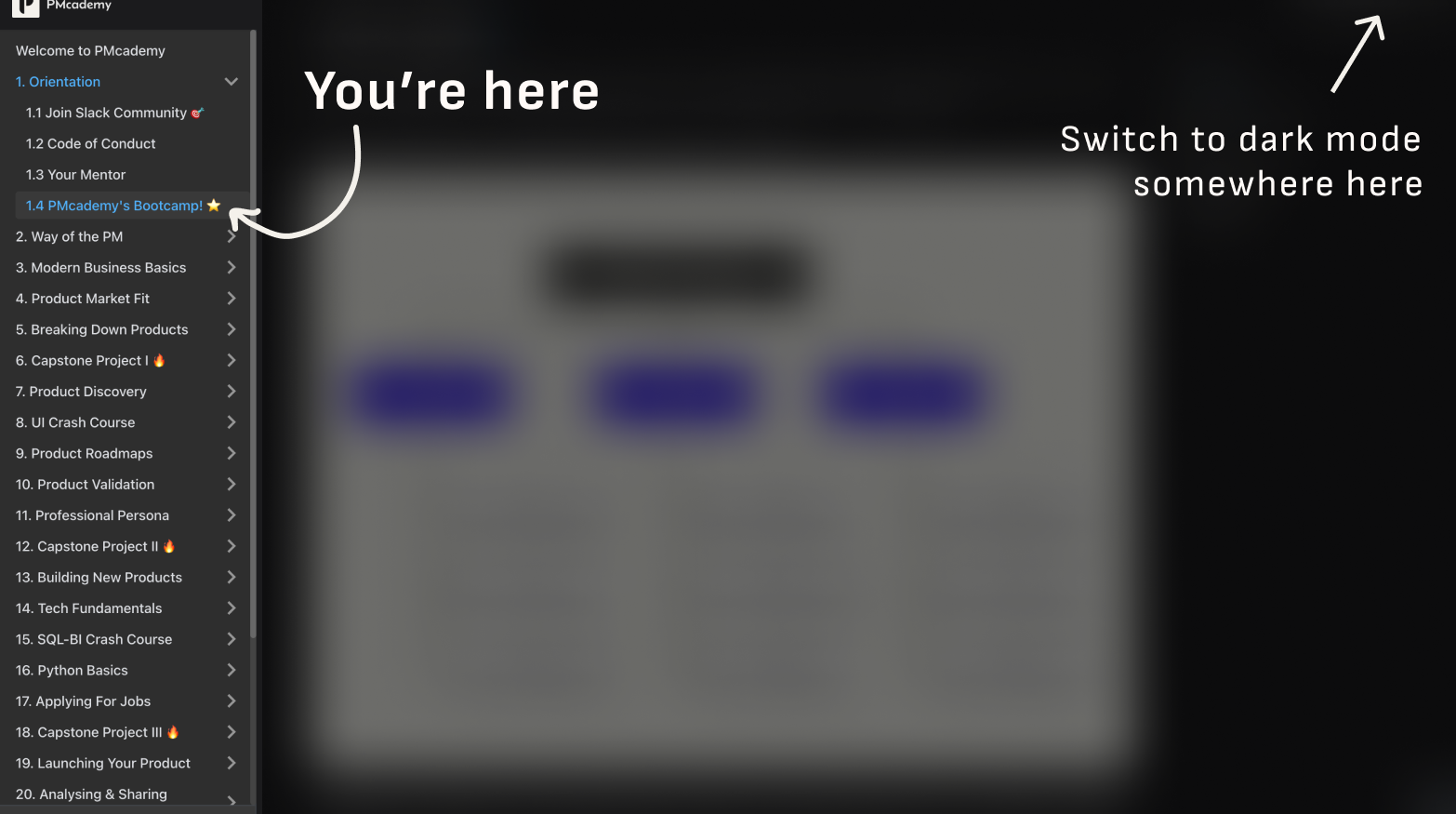
To get a sense of the modules ahead, check out the sidebar. As you scroll down the page, you will see a list of curriculum modules to complete before you graduate. Each module covers distinct learning objectives. If you click on a module, you will see that it is composed of several checkpoints, which break up the topic into smaller, manageable chunks of learning material.
This is where you are currently, you've got some good learning to do.
Lesson types
You will be required to complete every lesson in your program. And each lesson will contain a learning objective for you to master. These learning objectives are assessed through different types of lessons, which are called checkpoints:
Before we dive into lessons, you should know how this bootcamp is structured
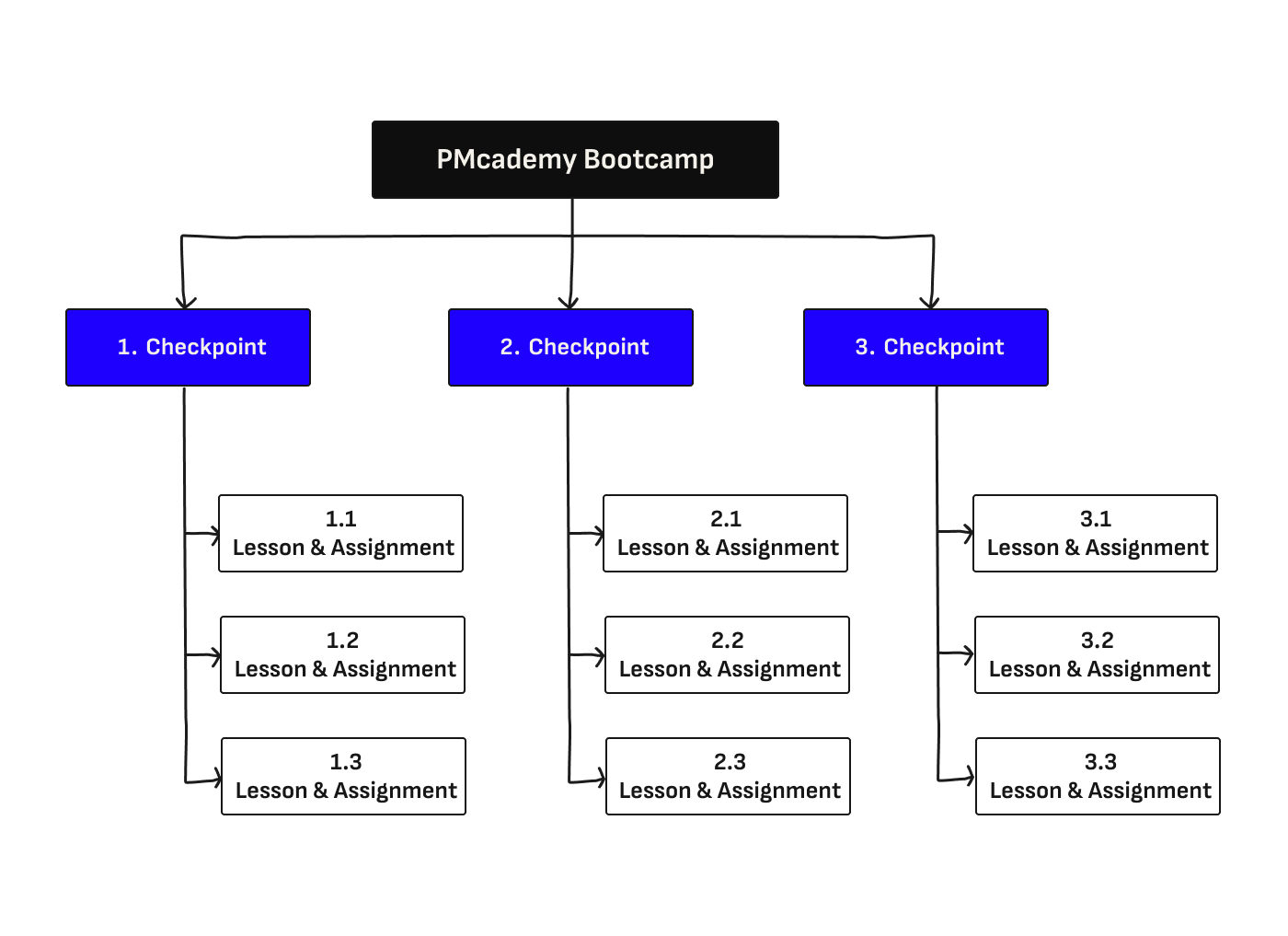
The bootcamp is divided into a series of modules, and each module will contain several checkpoints that you will need to complete. There are different types of lessons that you will encounter, each lesson has an emoji beside it to denote it's type. Read the sections below to understand the different types.
⭐️ - Assignment Lessons
New skills are best learned by doing. That's why most checkpoints in this program end with an assignment asking you to apply the concepts you learned.
Assignments are designed to help you test your understanding and identify things you should discuss with your mentor. Putting in the effort on each assignment, regardless of grading, will ensure that you will make the most out of this program and maximize your job search readiness.
Hiring managers have a high bar for professional work, so we set our standards accordingly. You would need to submit and upload your assignments on Medium as a way to getting into the habit of writing and building things in public. Before you graduate if you are keen of getting a graduating ceritificate Our grading team will review your work with rigor and provide lots of critical feedback to help you build your skills and achieve your goals. The grading team’s feedback will be shared with you and your mentor so that your mentor can use this information to advise you in your sessions.
When submitting work, it’s a good idea to include context and some explanation with your submissions rather than only posting a link to your work. People who read it can provide more detailed feedback if you explain your process, ask questions, or let them know what concepts you are struggling with in the assignment. This helps the process become more of a conversation. You can get better insights into where you can improve or what experienced product managers advise.
Throughout your program, you will likely receive some feedback on your work by our PMcademy Advisory Board members on your Medium posts. This isn’t something to get discouraged about. The feedback that you receive from the experienced professionals on our PMcademy Advisory Board team is a valuable resource. Treat it as part of the learning process and leverage it to become your best self on the job search and in your new career.
🎯 - Activity Lessons
These checkpoints have a small activity at the end. You can find the lessons with activites by following this 🎯 emoji. Activites are building blocks for assignments. You might have to submit a few of these. Take your time to do them.
🔥 - Capstone projects
In addition to assignments, you will be required to complete several capstone projects. These can be pretty hefty projects. A typical capstone takes about 20-25 hours to complete. Unlike assignments, you would have to take some feedback from your mentors on your capstone project and have them write a review/comment on your medium article. Mostly capstones require changes after the first attempt. This mirrors the workplace, where you will rarely submit a major project without getting feedback and revision requests from your manager or project lead.
Some capstones allow you leeway in choosing a topic. If you are aiming to get into a particular industry or type of company, it may be helpful to have at least one of your capstones built around that subject. Think of capstones as an opportunity to collect stories about your work and approach that you will later share at job interviews.
Each capstone project will be submitted on medium as well. We will explain in detail on how to do that in the respective checkpoint.
🤙 - Mentor call reminders
We have occasionally added a reminder to meet a Product mentor regularly. You can choose to meet a mentor as per your own time and schedule. Mentors are voluntarily taking their time to coach you. Please refrain from asking them about your assignments and use this time to learn about their experiences, journeys, setbacks.
Videos
Throughout the program, you will watch videos to aid in your learning. Being an open academy we mostly have presented videos from the public domain. But do watch them, they are carefully scouted and researched by our team to aid you in your learning. The internet is a massive free university, take advantage of it.
Your support network
One of the best things about being part of the PMcademy community is having a team of people dedicated to helping you succeed in the program:
- Your mentor is an experienced product manager who can provide insight into this field and help you prepare for your next career move. Mentors usually mentor you voluntarily and are from free platforms like ADPlist. They aren't in any ways related to PMcademy. You can choose to do the bootcamp without a mentor too, although it's very highly advisable to keep a mentor. You should meet with them regularly. Mentors answer any questions you have about the content, explain tricky concepts, and hold you accountable. You’ll learn more about how to best utilize your mentor’s support in the next checkpoint.
- The PMcademy Advisory Board will start working with you as you near the end of the curriculum. They are the one's usually giving you feedback on your capstone voluntarily. Since it's a free bootcamp, you can expect delays and time lag. It's also fine to complete the bootcamp without any feedback as such if your only aim is to gain theory knowledge. The PMcademy Advisory Board members are you go-to people to look up to for any questions that your mentor cannot answer on Product Management. You can reach out to them on our Slack workspace or on their respective LinkedIn profiles, whichever is faster. Again, be patient, they are all voluntarily helping you out. Since our bootcamp is pretty new, we are still in the process on appointing our board members.
Plan to learn
Learning online is not easy. It requires dedication, discipline and the use of effective learning strategies. Here are a few ideas to consider as you prepare to tackle this challenge:
Barbara Oakley demostrates it really well on how to rewire your brain and focus.
Consider these strategies and plan ahead, and you'll be well on your way to success.
Your notebook
Taking notes is an excellent way to ensure you read actively and make the most out of the content offered. You also need an easy way to keep track of questions you want to ask your mentor. How would you do all this? With a notebook!
Google Slides is the recommended format for your notebook for two reasons. First, presentations are a big part of a product manager's job, and we want you to get very comfortable using them. Second, some of your assignments will involve sharing videos (mostly of yourself practicing presentation skills). We've found that adding a video in a slide is easier than in many other shareable documents.
That said, you are free to use any document format that works for you, just as long as you can easily keep track of everything in one place. It's also a good idea to choose a format that allows you to share a link with your mentor when you want to use your notes or assignments to start a discussion.
This Google Slides template is a good starting point for your notebook. Please click File then Make Copy. You now have your own version of the file and can make changes as you see fit. Please note that if you don't already have a Google Account, you may need to first create one on Google Drive.
Assignment 01 ⭐️
Ready to get started on your new career journey? Start by submitting your first assignment.
In the slack channel #assignment1, please answer the following questions:
- How do you see your life changing by this program?
- How would you describe your ideal product management career?
This will be an intense and rewarding program, and there may be times when you lose your motivation. It may sound a little cheesy, but remembering “your why” will help you stay focused and persevere through any struggles.
Take a moment to review the names of curriculum modules ahead by scrolling down your dashboard. Ask yourself: which parts of this work will be most challenging for me? Learning Python? SQL-BI ? Talking directly with customers? Creating usable mockups and designs?
Then, take a look at your calendar for the next six months. Consider other demands on your time, like a big work project or a family wedding. Using a physical or digital calendar, commit the time you will dedicate to working on this program. As you plan ahead, keep in mind the timing of capstone assignments and the topics that are likely to require extra effort, time, and attention on your part.
Research shows that students do best when planning and committing to their learning time with specific details, such as when and where they will be learning. So be as specific as you can, and treat this as your first step toward success.
Submission
In our slack workspace in the channel #assignment-01 paste your answers