9.1 Intro ⭐
This section includes a mandatory Assignment ⭐
:::
Product managers are responsible for more than just individual features and designs. They also have to plan for the future of their product—anticipate risks and opportunities, figure out where the product is going, and plan for what needs to happen between now and then.
One way to document these plans is to create a roadmap. A roadmap is a core product management tool. It summarizes what features are planned, in what order your team will develop them, and when each feature is going to launch. In this checkpoint, you will learn more about roadmaps, their purpose and uses, and how to create one.
By the end of this checkpoint, you should be able to do the following:
- Describe the way product managers use roadmaps
- Practice creating a roadmap

What is a roadmap?
A roadmap is—much like it sounds—a plan and timeline of where your product is going. It details what features you intend to ship and approximately when you intend to ship them. Roadmaps serve many purposes and affect your communications with your team, other stakeholders, and your company as a whole.
A roadmap helps you keep track of what resources you need and when you'll need them for your product work. Your developers may be focused on shipping one feature while you and your designers are working on designs and details for the next set of features. A roadmap tells you what you'll be doing next and how to allocate resources effectively.
A roadmap also helps you communicate with your executive team on how you will be contributing to the company's goals. It's not always obvious how an individual feature or product change will impact the bottom line of your company. As you present your roadmap, you need to tell a story about your plans and explain how the company goals will be achieved through your product work.
Roadmaps are also an important form of communication with the rest of your company. They let other teams know what changes they can expect to your product(s) and when they should expect them. Your sales and marketing team will want to know when new features are launching so they can promote and sell them to customers. Similarly, your support team will want to know all the details about how these new features work so they can prepare and provide proper support for them.
The video below by Product Plan provides a brief overview of what a product roadmap is—and what it isn't.
Key elements of a roadmap
Roadmaps come in many different formats, but most will have three key items:
- What features and/or new products are coming up
- When approximately these features or products will launch
- How much staff time and capital is needed—in other words, a notion of the resources required to get these plans to done
In the sample image below taken from ProductPlan for JIRA, you can see that the team is working on several simultaneous tracks of features. This implies that there are enough resources to work on these different goals at the same time. This also communicates the risk of the roadmap in a way—if any individual feature takes too long or if there are interruptions due to lack of resources, the entire roadmap timeline could be at risk.
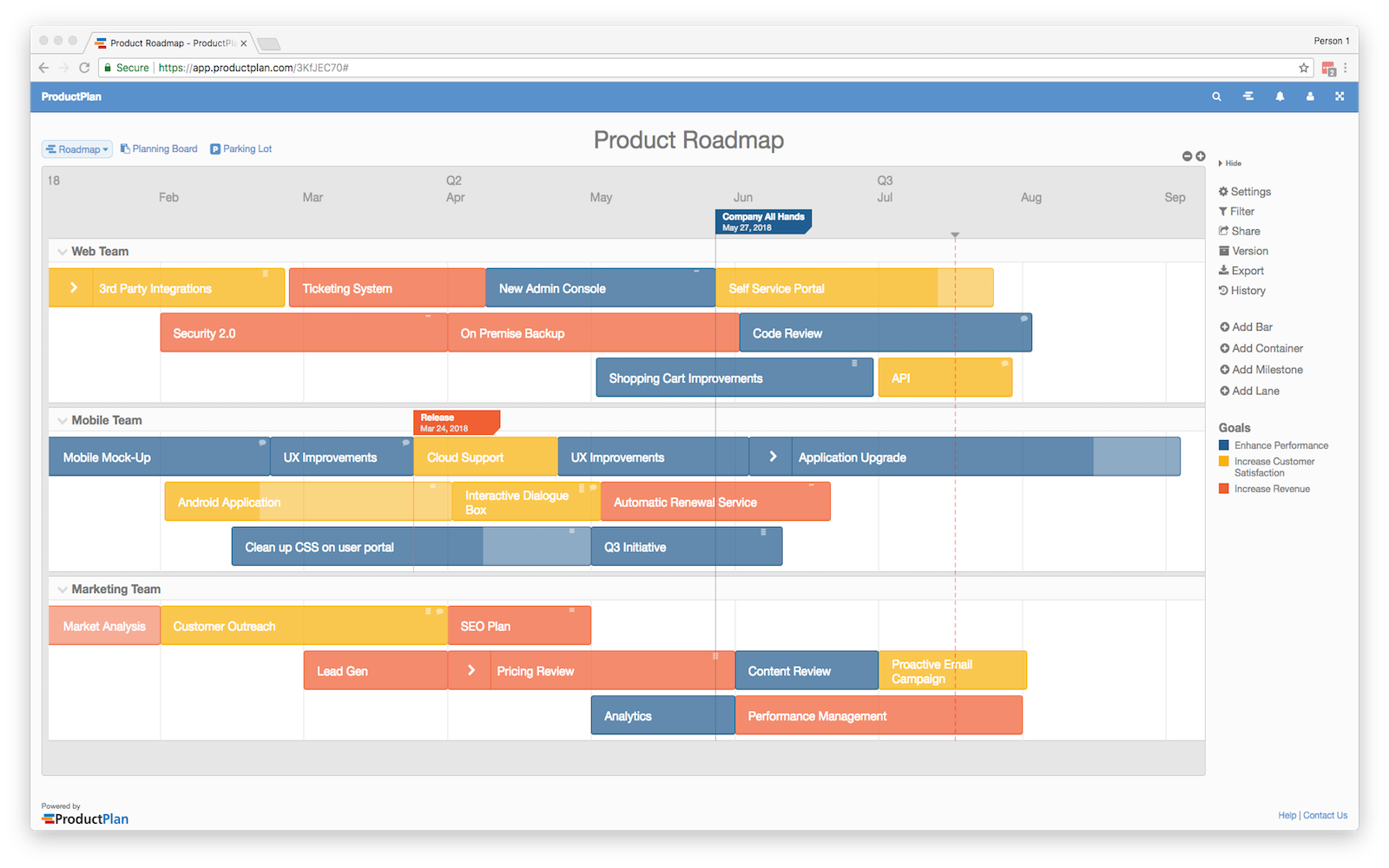
There are different ways to visualize your roadmap; it can be organized around resources and features or focus on priority or themes. Each has a use depending on your audience and goals, but all share the same items as noted above—some idea of time, resources, and outcomes.
The trade-off triangle
One of the biggest advantages of using a roadmap is to help you manage the resources that you'll need to build your products. This is commonly stated as a trade-off between three factors—time, resources (cost), and quality.
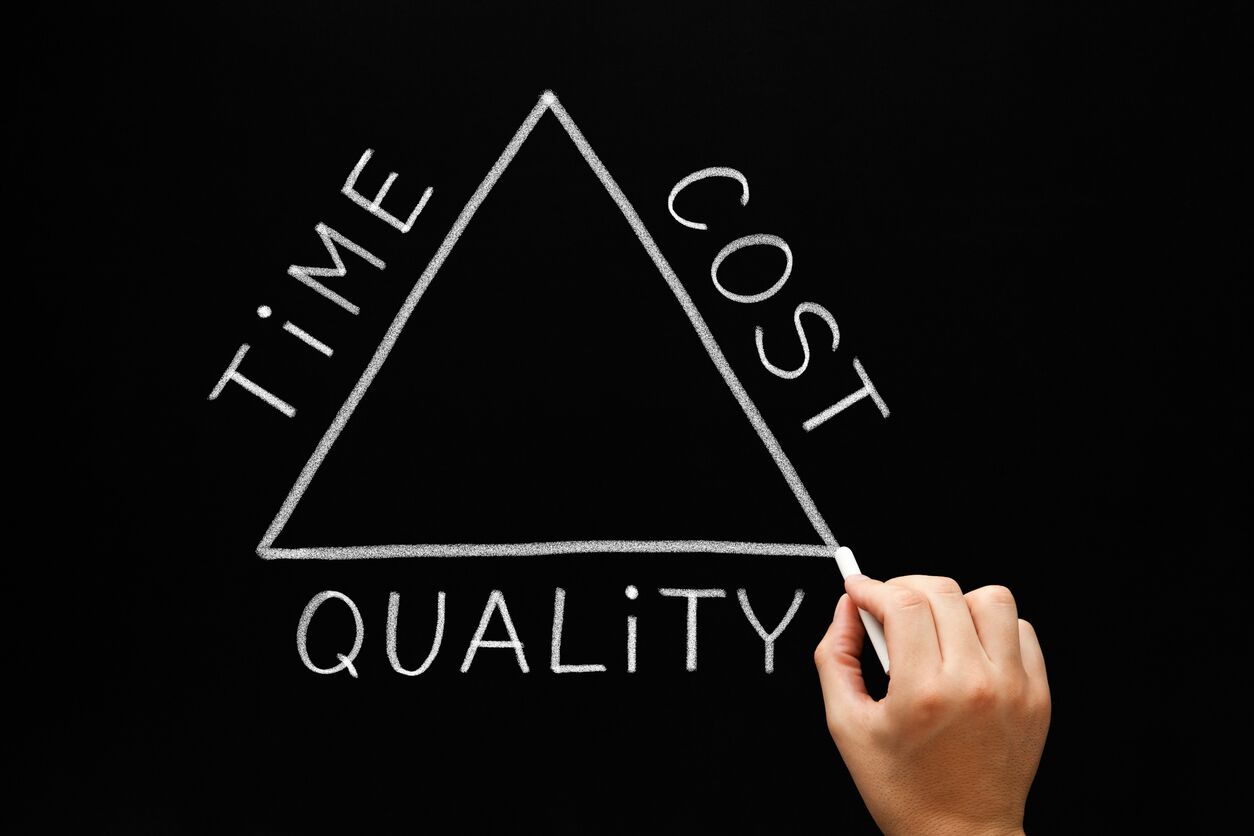
Time is the time it takes to complete features. This could include the time to design, develop, test, and deploy features. You'll need to make it clear which of those is and is not included in your roadmap. For example, if you work on a mobile app, it could take days or weeks to get approval from Apple and Google to publish your app. In that case, you may only want to focus on development time on your roadmap, not on deployment.
Resources are the people and other assets you need to complete building the feature or product. One way to show this is by breaking your roadmap into sections by which team is working on which feature. This is especially useful when you are resource-constrained and want to make it clear, for example, how your lack of design resources is creating a bottleneck and preventing you from effectively using your development team.
Quality stands for the complexity and scope of the features you create. This is mostly represented by the number of items you have in your roadmap. One thing to keep in mind is that there are many small items, like bug fixes or little tweaks, that are important to the product but too small to be included in a roadmap. It's up to you to find the right balance of things to include in the roadmap. Similarly, if you have a hard deadline to launch a feature, you'll have to find the right balance of what to include and exclude from your product so that the work fits in your roadmap timeline.
The rule of thumb is that you can only choose two of the three: time, resources, and quality. For example, you can have a complex, high-quality product, but you'll need lots of resources to complete it in a reasonable amount of time. Or you could have a high-quality product and complete it with a small number of resources, but it would take lots of time to complete.
Many times, you'll be constrained on both time and resources—you'll have a small group of engineers and designers to build your feature, and you'll be under pressure to ship features by certain deadlines. That means you'll need to focus on adjusting quality—that is, the size and scope of the features you can create within your other constraints.
Roadmap examples
Scroll below to see the diversity of roadmaps that you can create, displayed in publicly available roadmaps from companies big and small.
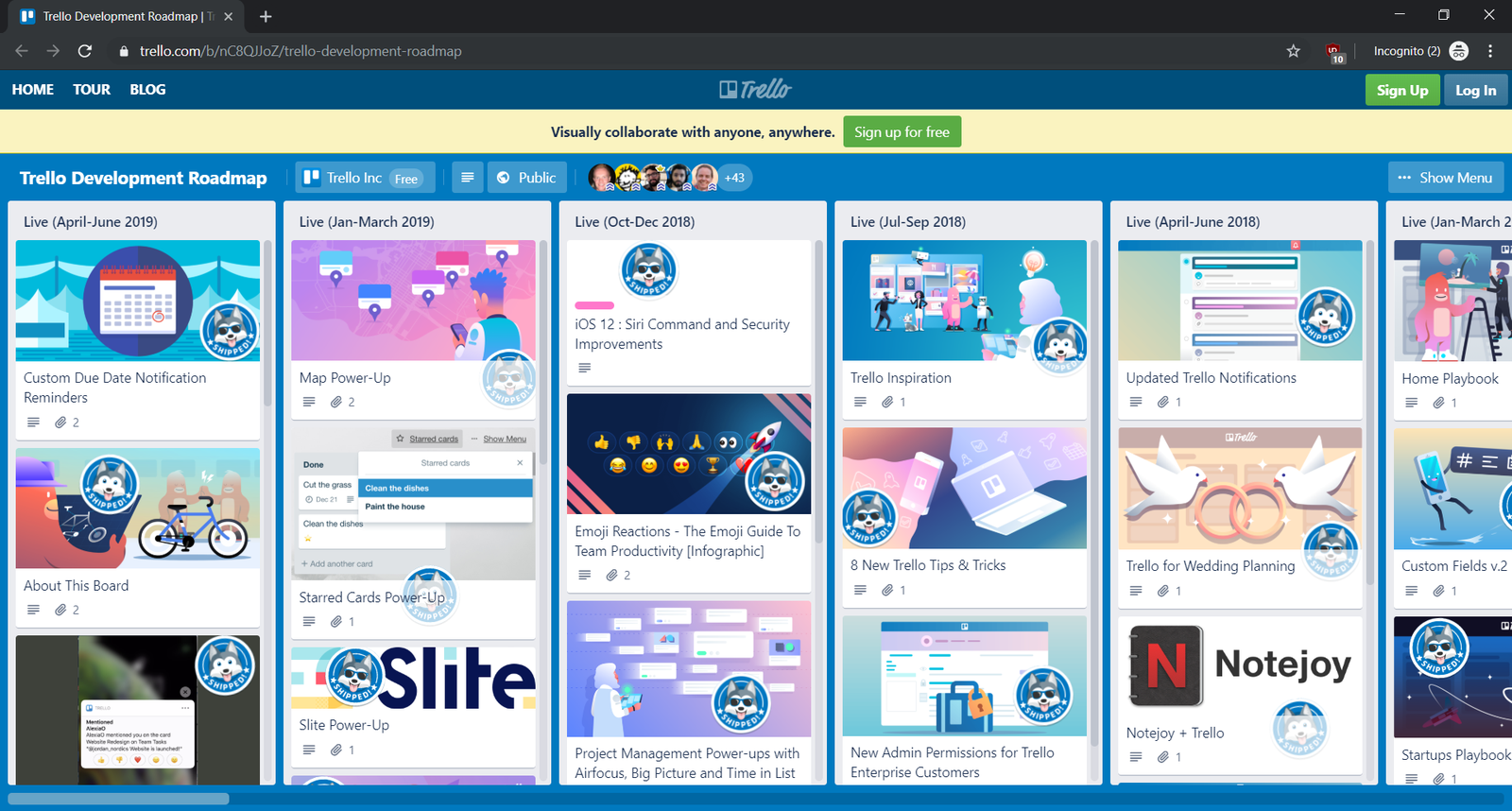
The project management application Trello shares the roadmap for their products in a Trello board. This lets anyone see where they're headed next, and Trello encourages people to comment and participate in the process of helping shape their roadmap. Similarly, Buffer uses Trello for their own public roadmap.
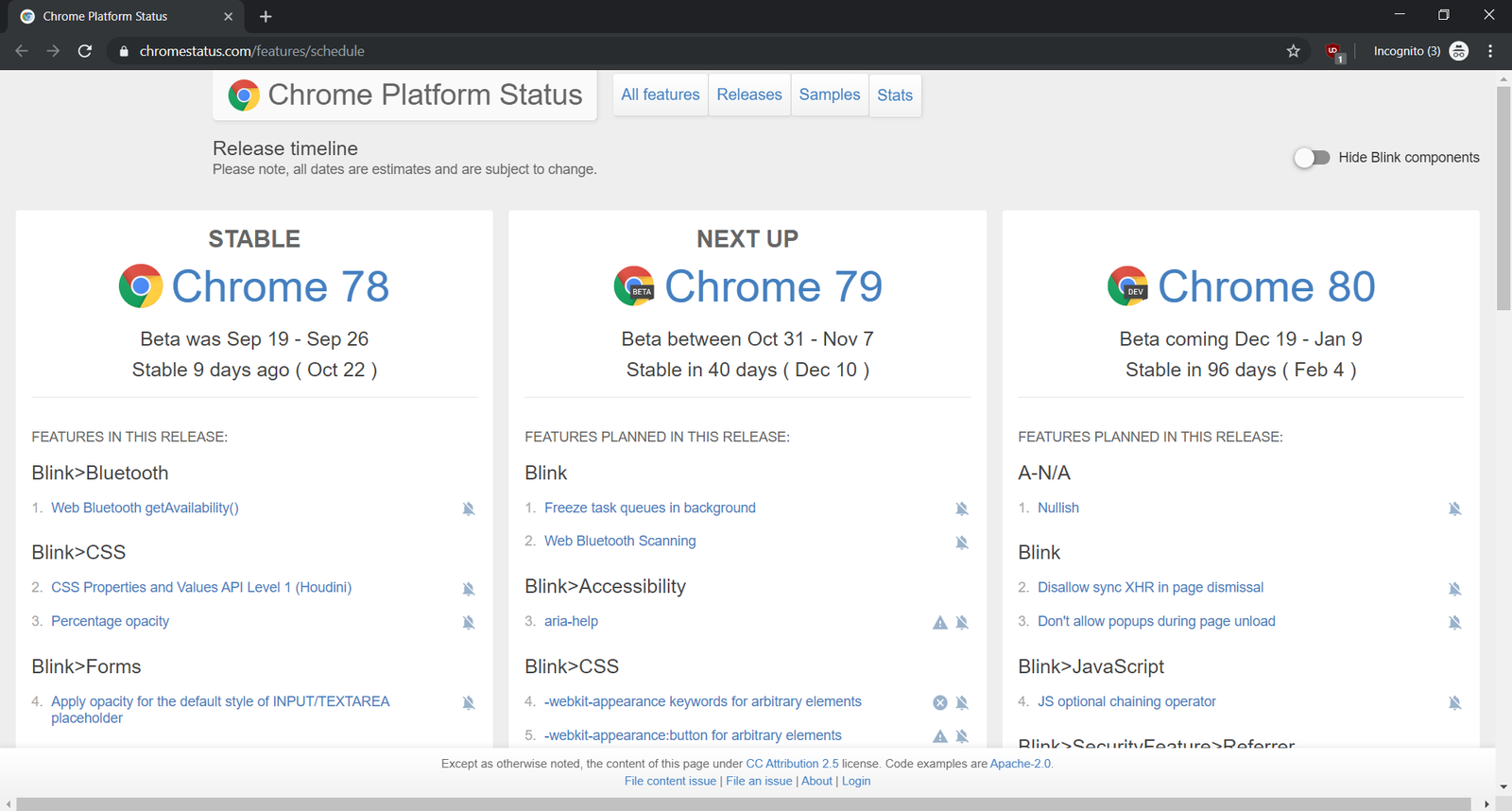
Chrome has a less pretty but still useful roadmap of their upcoming releases and features. It tells you which version will be released, its expected release date, and the set of changes included in that release. The roadmap is especially useful for developers who may depend on certain features in the Chrome browser for their own products.
Some products are so complex that they have multiple roadmaps. Microsoft Dynamics 365, a tool for sales teams, breaks their roadmaps apart by the teams and feature areas of the product. This makes it easier for specific users to know how the changes will impact them.
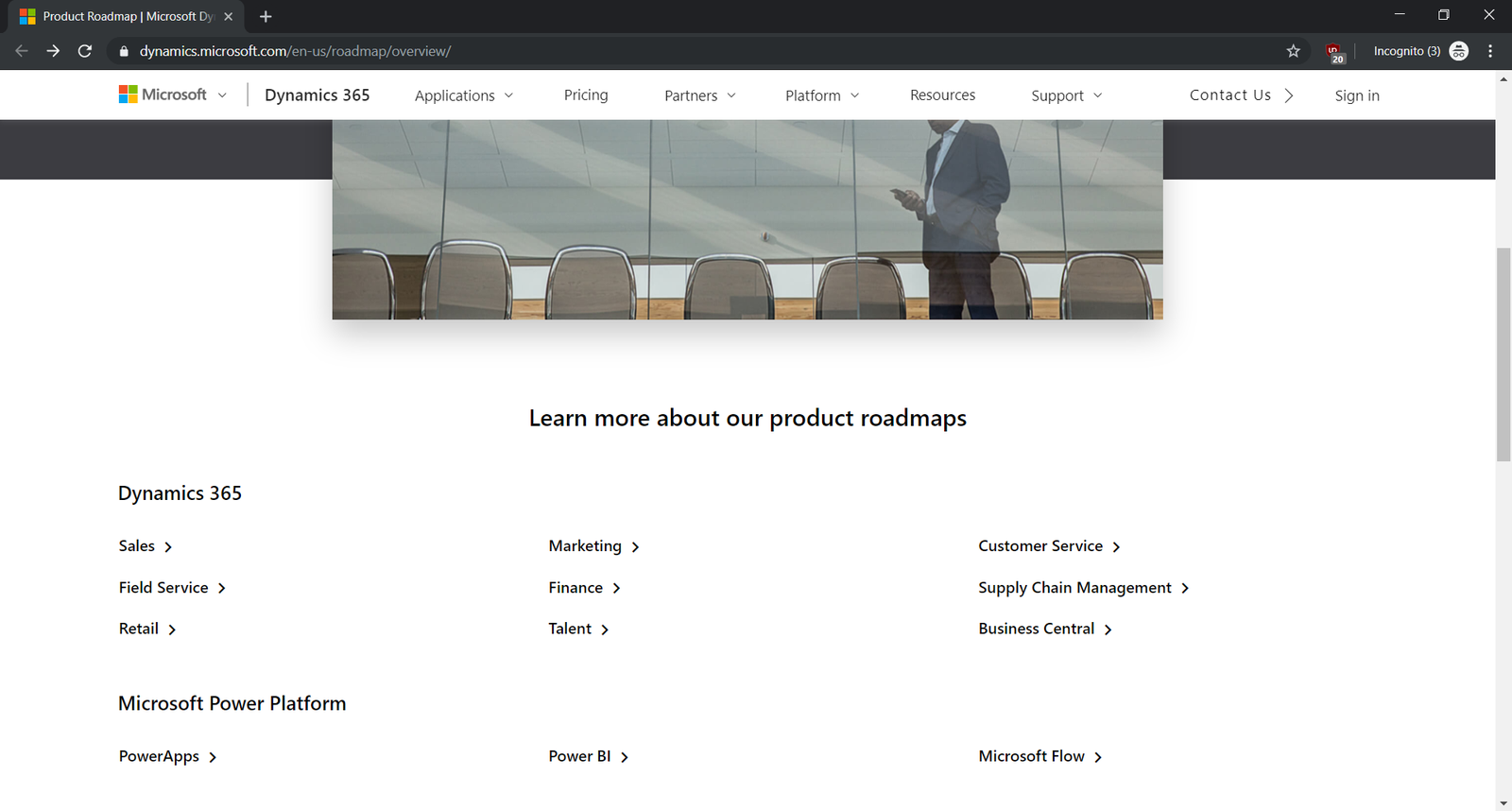
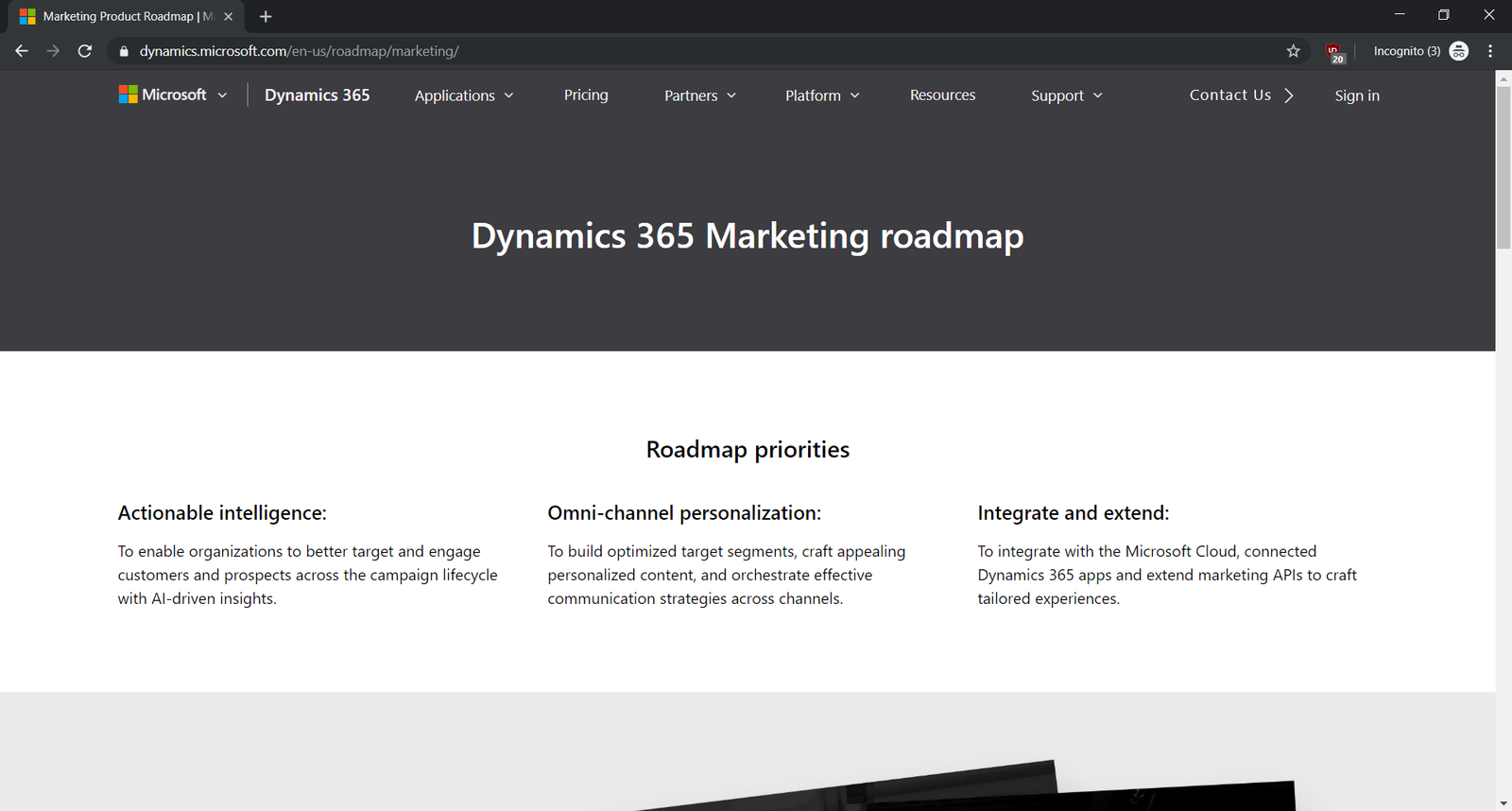
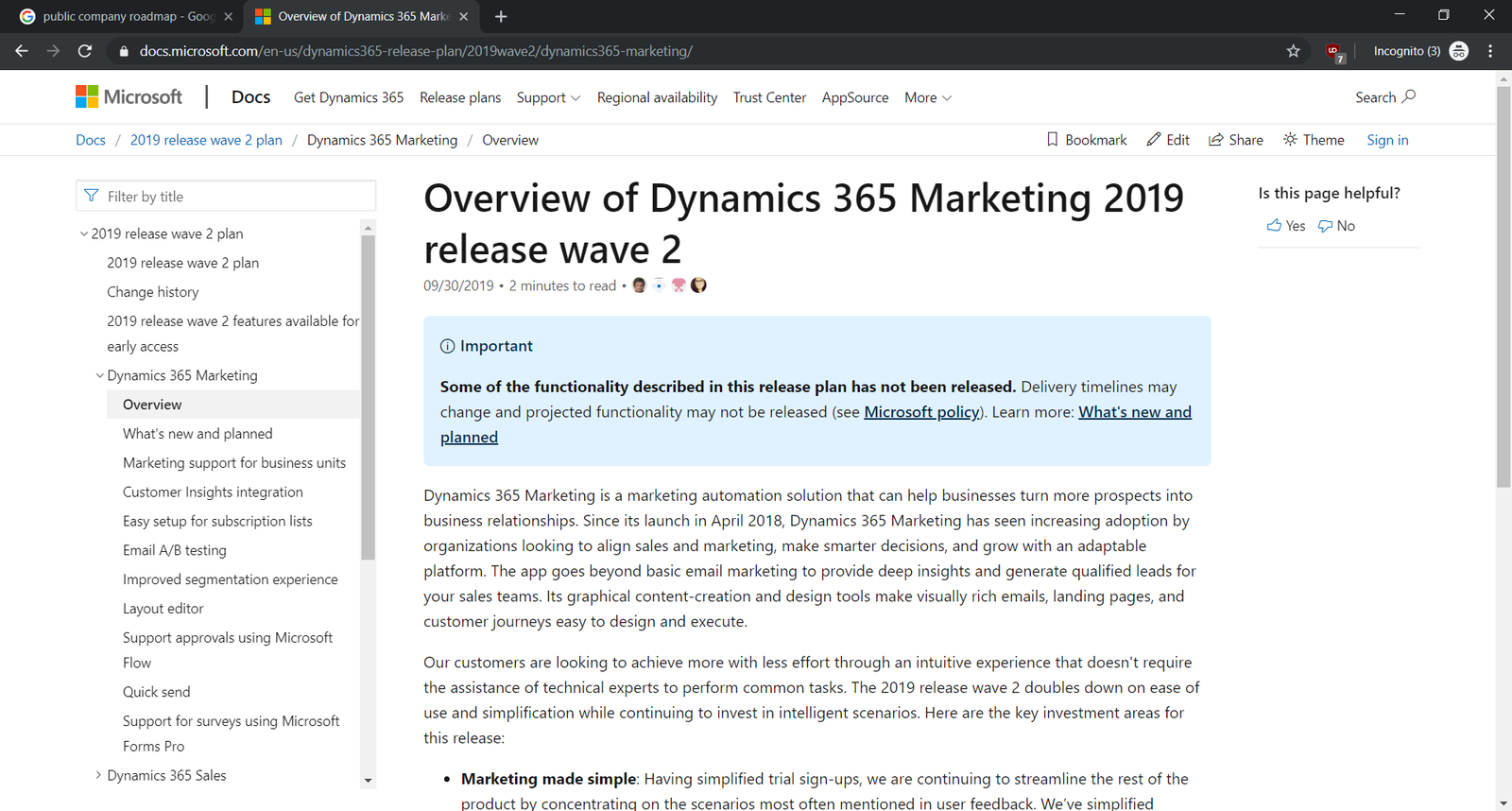
Think about the roadmaps above and the audiences they've been created for. Some are for developers, some for users, and all are for communicating what's coming next.
How roadmaps help
Roadmaps help PMs manage trade-offs and communicate decisions to others. With roadmaps, you can do the following.
See how the quality of your product will change over time
Because roadmaps are time-based visualizations, it's easy to see how your product will grow and improve as time passes. You can also see (and show stakeholders) how much time it will take to get to a specific level of quality.
Estimate time and resources for finishing a set of features
Big products are complex combinations of small features. Your roadmap can help you see how much time it will take and how many people it will take for you to complete the small parts that will come together for the bigger whole.
Make trade-offs between priorities
You can't do everything. When you have a roadmap, it's easy to see how your priorities fit together and which ones aren't realistic due to time or resource constraints. Visualizing your plans on a timeline makes these trade-offs easy to understand.
Align with stakeholders
A roadmap is something that you can share with your stakeholders. They'll appreciate being informed about what's coming up next. Your roadmap will allow other teams to make appropriate plans, and they'll have useful feedback for you about your priorities and planned features.
Share with customers
Your marketing and sales teams may want to share information about what's next with your customers to create sales and buzz. This is especially important for B2B products because you'll need to give your coworkers and customers more time to prepare for what's next.
Share a vision
A roadmap is not just a concrete set of features. It's a vision of where your product is headed next. A roadmap is a concise way of communicating where you're going. Some roadmaps can go months or years into the future to portray this vision in a way that others can understand.
Roadmap weaknesses and pitfalls
There's a lot that roadmaps can do, but they come with their own trade-offs and drawbacks.
They'll change often
One day you will be working on a project, and your boss will drop in and say, "You need to drop everything you're doing and work on this new project." All of a sudden, your roadmap isn't valid; you have to change everything. Interruptions and other priority changes will change your roadmap. That means you'll frequently have to update your roadmap so that it's accurate.
You won't do most of it
One of the realities of managing tech products is that projects will often go over their estimated duration. Your engineers may think that adding the sort option to your search will take them a week. It ends up taking them two weeks, however, because of unexpected cases that you didn't consider when you were designing it. Similarly, changing priorities mean that many items on your roadmap will never be built. The further out in time an item is on your roadmap, the less likely it is that you'll actually do it.
Dates create expectations
When most people see a roadmap, they see features and dates. Those dates may create the expectation that the feature will definitely ship on those dates. But as discussed above, due to changing priorities and delays, many of the deadlines in your plan will be missed. The people you've shared the roadmap with will be disappointed or resent the effects of your roadmap changes on their own plans. Some PMs try to counter this phenomenon by explaining to their sales and marketing team that a roadmap is not a release schedule, but the psychological effect of providing a timeline is somewhat unavoidable.
Communicating features, not strategies or justification
A roadmap is usually a list of features and improvements to a product. It doesn't include the why—that is, why certain items are prioritized next. A roadmap also doesn't include the strategy of what all these individual items add up to. This will lead many people viewing your roadmap to ask you questions like, "Why are we working on X next?" or "Why isn't Y on the roadmap?" In other words, the lack of detail in the roadmap format creates questions that you'll have to answer. This is both a good and a bad thing—it generates discussion, but it can be troublesome.
Stakeholder demands
This leads to the next issue—no roadmap survives first contact with your stakeholders. Your stakeholders will have many questions and demands from your team, and you'll have to spend your time and goodwill to convince them that your plans are right. Alternatively, you could take their advice and update your roadmap per their demands. In either case, the roadmap creates discussion, and you'll need to resolve the issues that come up once you share it.
Building your roadmap
Creating and getting approval for your roadmap is a process, and often an ongoing one. You can increase the likelihood of its success by taking it one step at a time.
Step 1: Have a vision (statement)
First, you need to have a vision of what your product will be in the future. Articulating the long-term result of all the effort you'll put into product improvements is an important step toward creating an effective roadmap.
Start by creating a product vision statement in the following format:
For [our target customer], who needs [customer’s need], the [product] is a [product category or description] that has [these unique benefits and selling points]. Unlike [competitors or current methods], our product offers [main differentiators].
This format encapsulates a lot of the different elements of a successful product. It has the following:
- A target customer, because products are not for everybody
- A customer's need or problem to be solved
- The product itself
- A description of what it does
- The unique benefits that differentiate it from similar or past products
- Competitors or other products that do similar things
- Your key differentiators that would get people to use your product over your competitors' products
If you can summarize your product vision in this way, you will be well on your way to figuring out the next set of items to focus on.
Step 2: Set a strategy
One way to help you refine your roadmap is to decide what goals and other metrics you want to hit. In other words, you need to decide how you will know you've been successful. Pick three or four main goals and KPIs that you want to get done in the next three to six months.
Often these will be the same goals you've already been working toward or simply refinements of your company's or team's KPIs. For example, if your e-commerce company has a goal of increasing revenue by 50% in the next quarter, you should pick your own KPIs to increase revenue. For instance, you could focus on increasing your conversion rate or improving your SEO ranking.
Some goals focus on other factors, like increasing competitiveness or improving the experience for specific user groups. Instagram stories were born out of a need to be competitive with the same feature on Snapchat. Many times, your goals will be dictated by specific outcomes like that. Your job then becomes focused on how to achieve those outcomes in the best way possible.
Capture your goals in a succinct fashion, like a bullet-pointed list or a couple of sentences. The goals should be concrete and measurable; specific outcomes make it clear when you've achieved them. Three to four goals is a good amount to focus on for a three to six-month period. Articulating your goal will help you explain to others why your roadmap is organized and prioritized the way it is.
Step 3: Brainstorm ideas
Once you have your list of goals, spend some time brainstorming a list of ideas that will help you achieve them. This is a great time to make it a group activity with stakeholders from around your company. Here are a few good rules of thumb for your brainstorming.
- All ideas are good ideas. Make it a positive environment.
- Limit the amount of time for the session; usually, 20-30 minutes is enough.
- Keep the ideas brief. You'll have time later to discuss them in detail.
Once you have your list of ideas, you'll be able to prioritize and rank them at a later time.
Who owns the roadmap?
As an individual product manager, you may not have much say in what goes into your team's roadmap. In bigger companies, it is more likely than not that the executive team, a department director, or another upper-level manager will build the roadmap. In that case, you'll take ownership of specific features or parts of the roadmap and will need to figure out how to get those parts done. In smaller companies, you may be solely or collaboratively in charge of creating the roadmap but will most likely need to approve it with executive team members to ensure it aligns with your company's overall strategy and goals.
Keep in mind that roadmaps are always works in progress. They'll change often and quickly, and you'll have to deal with the bumps and interruptions along the way. That's fine—your job is to take those bumps in stride, update your plans, and keep making progress confidently.
Assignment 08 ⭐
Imagine you're the PM on Indeed's mobile app. Your top goals are to increase the number of people who view the app and the number of people who apply to a job that was found through the app. Spend some time to get familiar with the application, then follow the three steps outlined above to start creating your roadmap:
- Come up with a product vision statement using the format described in the lesson
- List at least three concrete goals or KPIs that indicate you're on track to achieve that vision
- Brainstorm at least 10 ideas for how to improve the mobile app (there are no bad ideas)
Spend time thinking carefully about this assignment; you will build on the foundation you create here in several upcoming assignments.
Submission
Submit your links in the slack channel #assignment-08