2.1 Product Management 101 🎯
This section includes an Activity 🎯. Sections marked with a 🎯 are the one's that have an activity in them. Activities are optional assignments. But we highly recommend you do them.
What is product management all about? While you no doubt know more than the average person, you might not be able to explain exactly what product managers do or how their work contributes to the business objectives of modern companies.
The goal of this checkpoint, and ultimately this entire module, is to give you a high-level overview of the product management field. You'll learn about a product manager's skills, responsibilities, and collaborators, and you'll start thinking about how to discuss these fundamental concepts. Gradually, you'll become familiar with the professional language that would show employers that you're ready for a career in product. In other words, you will start thinking and talking like a product manager.
By the end of this checkpoint, you should be able to do the following:
- Explain the product manager's core role, skills, and responsibilities
- Describe the role of design, tech, and business in creating successful products
- List and explain the phases of the product lifecycle
What is product management?
Product management is the set of skills and responsibilities used to lead teams to create solutions to the problems that their users are facing. A product manager, or PM, is a person who uses product management techniques to do this. PMs accomplish this feat through the use of technology, design, and strategy. In the technology field, teams build solutions using hardware, software, websites, mobile apps, and many other platforms. A successful PM is one who strikes the right balance between delivering value to users and accomplishing the business goals of their company.
Atlassians video would give you a better insight on what PM actually does.
What is a product?
In business, a product is anything that is offered to customers. These can be physical goods like an iPhone, a software product like Microsoft Excel, or a service such as Uber.
Some products are successful, but many are not. You might have great ideas for products you'd like to create, but an idea isn't a product. Even if you build it out, there's no guarantee of success. Famously, pets.com was an ecommerce website that launched in 1998 with a large investment from Amazon. It had Super Bowl ads and a Macy's Thanksgiving parade balloon and spent tens of millions of dollars before shutting down in 2000. In two years, pets.com couldn't turn the buzz into a successful business.
To avoid a similar fate, companies hire people with specialized skills who can lead teams through all the details that go into creating successful products. These people are often product managers, and they ask several questions to better understand their company's product.
- Who is this product for? Some products are for everybody, but others are only for specific groups like gaming teens, new parents, or bed-and-breakfast operators. Even if you manage a widely used product like Gmail, you still need to think about specific segments of your audience that may have unique needs.
- What problem is this solving? Before you start working on solutions, you need to really understand and validate the problem your product will focus on. Kitchensurfing, a site that allowed users to book private chefs, shut down after raising a $20 million investment. The problem it was trying to solve wasn't common enough—it's hard to imagine that millions of people have a problem finding a chef to come to their home and cook for them.
- What's the solution to that problem? A product needs to address the problem in a way that makes it more valuable than previously available solutions. The Amazon Fire Phone was panned as confusing, ugly, and pushing too hard to get you to buy more stuff from Amazon. That wasn't the solution consumers were looking for to address their phone woes.
- What are the alternatives? If the problem is real, it's unlikely your company would be the only one trying to solve it. Nearly all products have at least one competitor. What's better about your solution versus theirs? If the consumer is choosing between Spotify and iTunes, their decision may depend on the other devices they own. For cell phones, price is the biggest differentiator between an Android phone and an iPhone.
- How are you protected from copycats or future competition? Your product should be hard or impossible to copy. For example, after the iPhone's initial launch, its design was quickly copied by others. On the other hand, Apple still controls the iPhone app store, meaning they are immune to competition selling apps on their devices.
- What does success look like? How do you measure the success of your product? A few common measures of success are profitability, number of users, and market share. If you're a startup, you probably care more about the latter. For an established business, the bottom line of profit margins is often the measure of success. For a subscription-based service like Netflix, success may be defined by the number of subscribers that renews every month. By contrast, for a product like Apple AirPods, consumers may not buy another pair for years. These factors are part of what goes into product decisions.
Product managers are deeply familiar with all aspects of their product, including the answers to these questions. They use this understanding to contribute to the process of making decisions about product features and priorities.
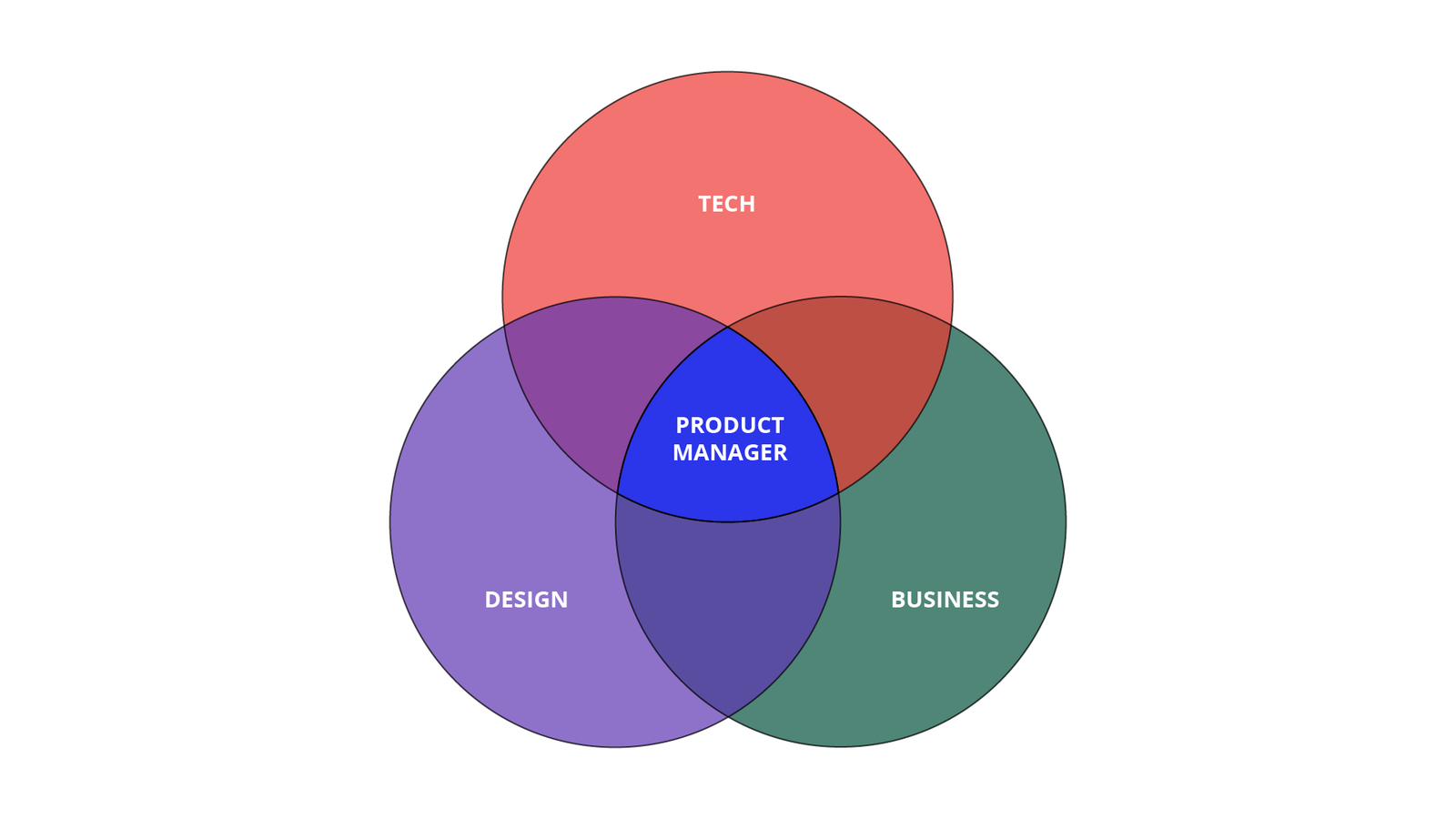
Tech-Design-Business
Product decisions are usually related to one of three functions: technology, design, or business. A product manager needs to understand all three and synthesize them into a successful whole. Each of these functions has an important role to play in building successful products.
Technology
Nearly every modern product uses technology in some way. Sometimes the product itself is the technology, like a Tesla automobile. Sometimes the product is an app that appears pretty simple, such as an app that plays music. But an app like Spotify, for example, actually uses sophisticated tech behind the scenes to do things like recommend the right song to play next.
PMs work with tech teams to translate product problems and solutions into feasible technical solutions. Some product problems are too big to be solved by your tech team in a reasonable amount of time, like rebuilding Google's search engine from scratch. Your job is to work with your tech team to find the right balance between an optimal solution and what can realistically be achieved with the resources you have at your disposal.
Design
For a long time, design has been a competitive advantage in products—that is, if your product had a superior "look and feel," it stood out among competitors. Products like Apple's iPhone launched to huge success, largely driven by their leap forward in design. Today, great design is considered a basic requirement for products, as consumers expect all products to look and feel amazing.
Product managers work with designers to help balance the various factors that go into design: aesthetics to make the products look great, usability to ensure customers can use them successfully, and feasibility to ensure they can realistically be built with the resources you have. Your job as a PM is to ensure that the final design of the product still meets the needs of the users and the business.

Business
The goal of all products is to create business value. Value may mean different things to different businesses, but for most product managers who work in for-profit companies, that means selling your product. Who are you selling to? How much would they be willing to pay? Can you produce it for less than what consumers will pay? If a product is underperforming, how should you address it? These are complex questions, and your job as a PM will be to generate data-driven answers and recommendations.
The translator
Product managers live at the intersection of business, design, and tech. They need to be excellent translators and have the ability to streamline communications between the different teams, making sure everyone is aligned and creating the same product.
For example, the sales team at a company might have a problem that they want a technology fix for. But the salespeople will not know what is feasible from a technological perspective. As a product manager, you will work with the tech team to determine the various options for solving the problem and ultimately decide which tech solution to attempt.
Similarly, a tech team might be given specs and designs for a new product. Perhaps they deliver a minimal, unpolished version of the product. The product manager will then step in to propel that team to polish the product to match what the design team created in order to ensure an optimal user experience.
Why have product managers?
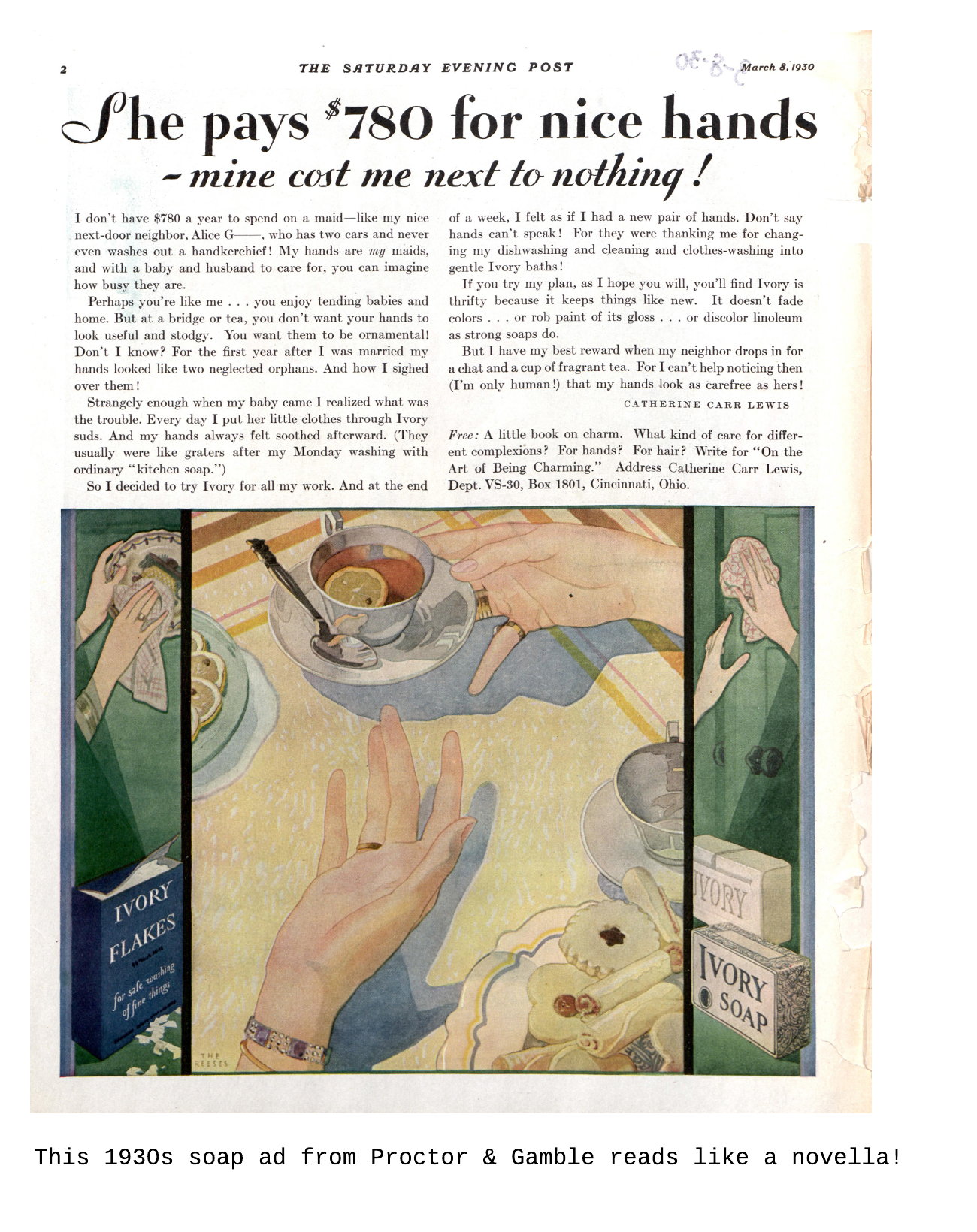
The first seed of what is known of as product management is considered by many to be a three-page memo written by Proctor & Gamble's Neil McElroy in 1931. McElroy believed P&G soaps should be allowed to compete with each other just as much as with outside competitors.
He suggested an idea that was revolutionary at the time: a "brand man" who would take responsibility not for a specific business function—such as production, marketing, distribution—but for all aspects of a specific product. The brand man responsibilities included understanding the customer, coming up with marketing strategies, and solving product development issues. For example, the brand man may have been responsible for reviewing wrapper revisions.
The idea spread and was later adopted by technology companies to address unmet needs in the software development process. In the 1980s and 1990s, before the software industry had product managers, engineers were often the ones making decisions about product usability or how to address customer feedback.
This was not ideal. The engineers already had their hands full trying to make the software work, and they didn't necessarily have the business or design skills to handle product decisions. Product managers filled the gap by handling these issues and becoming advocates for the end-users throughout product development.
Modern product manager responsibilities
Today, product managers are the glue that keeps the tech and design teams working together to build solutions that work for the rest of an organization. PMs handle various duties:
- Analyzing product use and sales to ensure they provide the right solution to user problems
- Talking to internal and external customers about their problems using products
- Working with developers and designers to overcome obstacles while building products
- Making recommendations about how to improve business strategy
- Responding to shifts in company strategy and ensuring products are aligned with them
To do all of this, product managers need to do the following:
- Conduct deep interviews with users to get to the "why" of a problem
- Understand the technology of their products and work successfully with engineers
- Be able to explain the complexity or nuance of the technology to non-technical people
- Pay attention to detail and design so that the final product solves the problem in an attractive and easy-to-use way
- Maintain the usability of products and prioritize ongoing fixes versus new features
- Evangelize and promote their products internally and externally so that customers can use the products and coworkers can understand how they work
Mastering all of this is an essential part of becoming a successful product manager. You will build the skills to do all of this, and much more, during this program.
Heard of Joma Tech? He's a got a really insighfut talk with a PM to know what they actually do/
The product lifecycle
One way to think about a product is to think about where it is in the overall product lifecycle. At a high level, products go through four primary lifecycle phases: launch, growth, maturity, and decline. The product manager's responsibilities vary based on the phase their product is in.
Launch
The launch phase is the process of getting a product off the ground, starting from zero users. During this time, a product manager is obsessed with the main metrics of how the product is doing, talking to users to get their feedback on the product, and ensuring that the product's features match the needs of the people using it. This often means that profit is not a priority since you're still trying to build up a user base for the product. Once the product features match the needs of your first users, you're ready to turn up the volume on acquiring new users.
Growth
After a product has been launched and the product manager has validated that it does, in fact, meet users' needs, the product enters the growth phase. A growing product already does a good job solving a problem for a set of users and is looking to either solve more problems or do so for more users. As a product manager, this typically means you'll work on adding features that appeal to new user groups or make your existing users more committed to your product. During this phase, you're ensuring the product is strategically aligned to the business goals and preparing your product for the future.
Maturity
A mature product has a consistent user base and generates revenue. For example, the product has reached all the people who could become customers or the remaining growth opportunities are not worth investing in. During maturity, a product manager focuses on maintaining the product's success and optimizing the business metrics. If you manage a mature product, you will still need to pay close attention to ensure that the product isn't declining and that competitors are not winning over your customers.
Decline
A product in decline is losing users or revenue. Moving a declining product back into growth or maturity can be extremely difficult, so it's often better to terminate the product. Similarly, a company may have a strategic reason, such as a change in the business model, to sunset (terminate) a product. As a product manager, you'll have to make tough choices with a product at this phase—to increase investment in the product to stop the decline, to stop supporting the product altogether, or to start working on a new product that will replace this one.
Product management through the lifecycle
Each phase of the product lifecycle has different problems to be solved and requires different skills. For example, during launch, you can focus on interviewing customers and helping promote your product to its first users. During maturity, your focus will be on analyzing the health of your product and working with your tech team to keep it fully operational. When working on a product, ask yourself, "What phase of growth is this product in? How does that let me know what I should focus on?"
The video below gives a beautiful insight on building great products by Guy Kawasaki
Product management skills
Throughout every phase of the product lifecycle, product managers use a variety of both hard and soft skills to accomplish their day-to-day tasks.
Hard skills
Hard skills are measurable abilities you can learn, like programming or data analysis. There are several common hard skills in product management:
- Tech knowledge: A product manager should know how modern hardware and software technology works, how engineers develop software, and how tech can limit or multiply your product's potential.
- Design fundamentals: It's important to understand the way products are designed, ensuring designs solve the problem at hand, and leveraging design to tip a product's success in your favor.
- Marketing basics: It's essential to know how a product is promoted, packaged, and priced for the people who use it, and what happens to your product once you've shipped it into the world.
- PM-specific tasks: There are activities that only product managers perform, like managing a product roadmap or writing product stories.
Soft skills
Soft skills are sometimes known as "people skills" and are harder to measure. You learn and hone them through practice, like handling upset coworkers or presenting your ideas effectively. The following soft skills are necessary for effective product management:
- Negotiation: Knowing how to convince others or find middle ground with others who don't share your opinion is a vital skill in effective product management.
- Presenting: As a product manager, you should effectively communicate your ideas in formal and not-so-formal settings.
- Listening: It's important to know how to listen to people in a more effective way, asking the right questions, drawing out information, and truly understanding needs and problems.
- Handling feedback: Everyone will have an opinion about your product. When they share it with you, you need to make them feel good about their contribution, even if their opinions and suggestions weren't always accepted.
- Time management: Time is your most valuable asset. You'll always have more work than the time to do it, so knowing how to manage your time is essential. Take charge of your calendar, and you'll be well on your way to doing your best work.
- Being proactive: It's easy for teams to become complacent when building or improving a product. The PM's job is to go the extra mile, seek out the work to be done, and ensure it's completed.
Activity 🎯
If you haven't yet created your notebook (as mentioned in the orientation module), please do so now by making a copy of this template and saving it to a personal Google Suite account. Use your notebook to keep notes and complete assignments throughout your time in the program.
Now, to your assignment. Record a video of yourself answering the questions listed below. Questions about favorite products and the PM role are common in job interviews, so it's important to practice not just thinking and writing about them, but also answering them out loud confidently. This is an opportunity to start developing your ability to speak and think and speak like a PM. I know like most other's at the start you are already thinking of skipping this activity, but don't.
🚨 You don't need to show us or the public the video. It's only for yourself.Just getting into the habit of recording and watching yourself speak can improve your communication skills drastically.
You can use your computer's camera to record yourself. If you are on a Mac, open QuickTime Player and choose New Movie Recording. If you are on a Windows computer, use the Camera App. You can also record using a cell phone.
Your video should not exceed 10 minutes (and can be much shorter). Prepare for the recording session by writing your answers in your notebook. Feel free to record yourself more than once—the better you get at answering these questions, the easier it will be to do so during a job interview. You may also want to discuss or practice these questions with your peers.
- Think about products you are familiar with from everyday life. Come up with an example for each of the following, and explain your choice:
- A product that has great design
- A product that uses impressive technology
- A product that allows a company to conduct amazing business
- Explain product management to someone else. What is the job? What are the main responsibilities? What kind of skills do product managers use?
- What already makes you a good fit for a PM role? What existing skills, strengths, and past experiences will help you in a PM role?
- What do you think you'll need help with to become a great PM? What skills will you need to develop?
Upload your video to Google Drive, then easily add it to your notebook by clicking Insert, then Video, and then from Google Drive. (If you prefer, you may use other methods, such as uploading to YouTube. Don't be shy 😇)